Ghoken Thali: A Complete Guide to Nepal’s Buckwheat & Ghee Set Meal
25th March, 2026
If you are searching for an authentic hill-style Nepali meal, the ghoken thali is the one to go for. Unlike widely known rice-based Thakali thali plates, ghoken thali is a traditional buckwheat-based set meal that originated from Nepal’s mountain food culture. Made with just buckwheat flour, water, and ghee, it reflects a time when food was designed for strength, simplicity, and sustained energy.
This guide explains exactly what ghoken thali is, how ghoken is prepared using the traditional method, how it tastes, how it is served at Jimbu Thakali by Capital Grill, its nutritional value, the different types available, and where to eat authentic ghoken thali in Nepal.
Quick Answer – What Is Ghoken Thali?
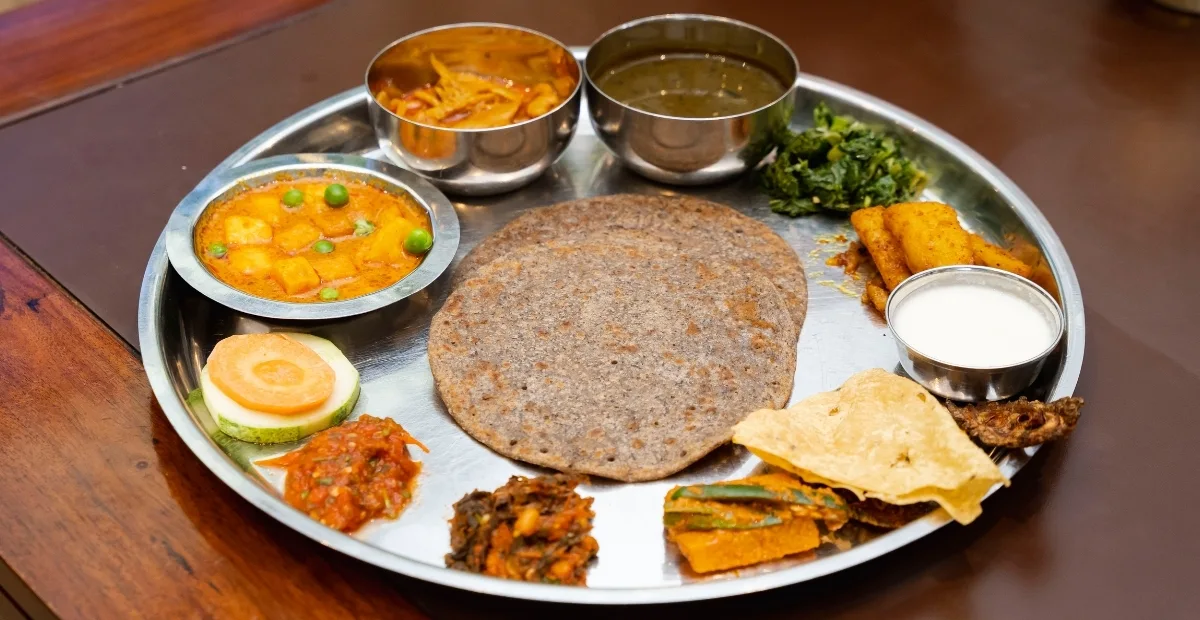
Ghoken thali is a traditional Nepali set meal centered on ghoken, a soft buckwheat flat item made from buckwheat flour and water, cooked in ghee. At Jimbu Thakali, it is served as two pieces per plate, mainly for lunch and dinner. Ghoken itself is also commonly eaten as a snack.
What Is Ghoken Thali Made Of?
Ghoken thali is defined by its simple and precise nature. The main ingredients are as follows:
- Buckwheat flour
- Water
- Ghee
The flour and water are mixed in an exact 50:50 ratio to create a thin batter. No spices, herbs, or additives are used in the ghoken itself. Ghee is used for cooking, giving the dish its signature aroma and richness.
This simplicity is what defines ghoken as a genuine Nepali buckwheat preparation, free from contemporary shortcuts.
How Ghoken Is Prepared? (Traditional 5-Minute Method)
Ghoken is prepared quickly, though with care, using a method that's been passed down from families of the hills for generations. The traditional process is quite simple and effective:
- Buckwheat flour and water are mixed in a 50:50 ratio to form a thin batter.
- A pan is heated and coated with ghee.
- 150 ml of batter is poured onto the pan and spread into a round shape.
- The ghoken is cooked on a medium flame.
- Once one side turns brown, it is flipped.
- Total preparation time is around 5 minutes per ghoken.
The quick preparation of ghoken also explains why it was so suited to the lifestyle in the hills, where food had to be fast, filling, and reliable.
Taste and Texture of Ghoken
Ghoken has a soft texture and a plain, neutral taste, which is intentional. The richness comes not from spices but from the ghee used during cooking. The mild buckwheat base absorbs flavors easily, making ghoken an ideal companion for meat gravies and side dishes.
It is mild and light, and it does not overpower. Rather, it is a clean base that allows the rest of the dish to take center stage.
How Ghoken Thali Is Served at Jimbu Thakali?
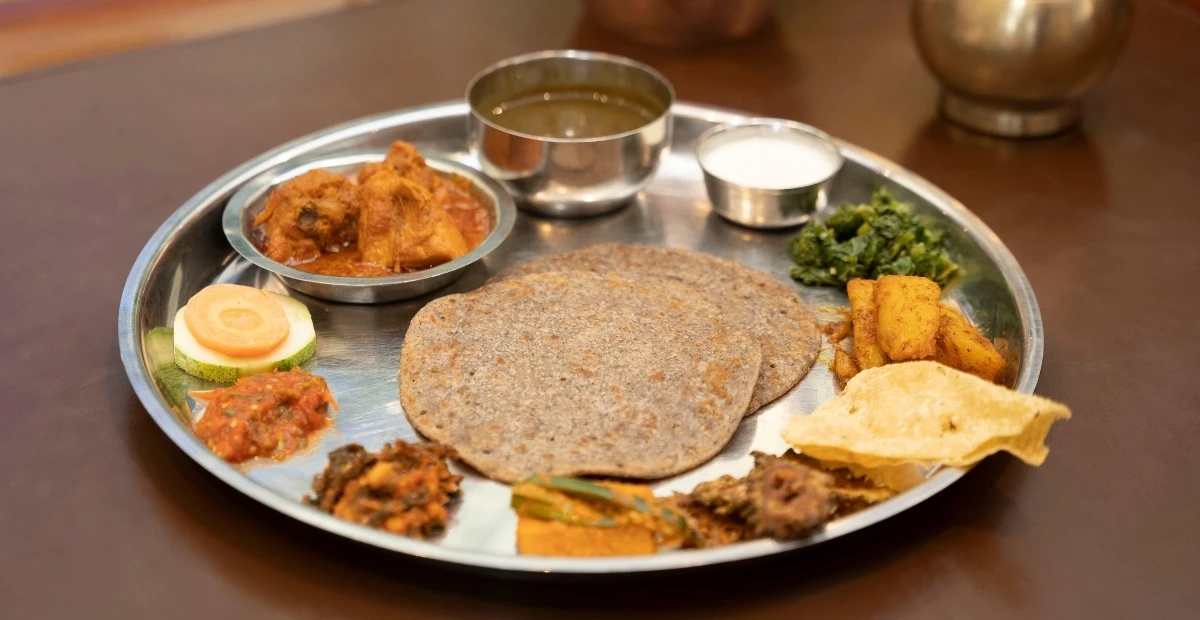
At Jimbu Thakali by Capital Grill, the ghoken thali is offered with a traditional serving style:
- Two pieces of ghoken per thali.
- Served as a complete set meal.
- Available for lunch and dinner.
- Ghoken alone is also served as a snack.
The ghoken arrives hot with a visible layer of ghee and iconic side dishes and protein accompaniments. And this serving is well-structured to keep the meal balanced, authentic, and satisfying.
Types of Ghoken Thali Available
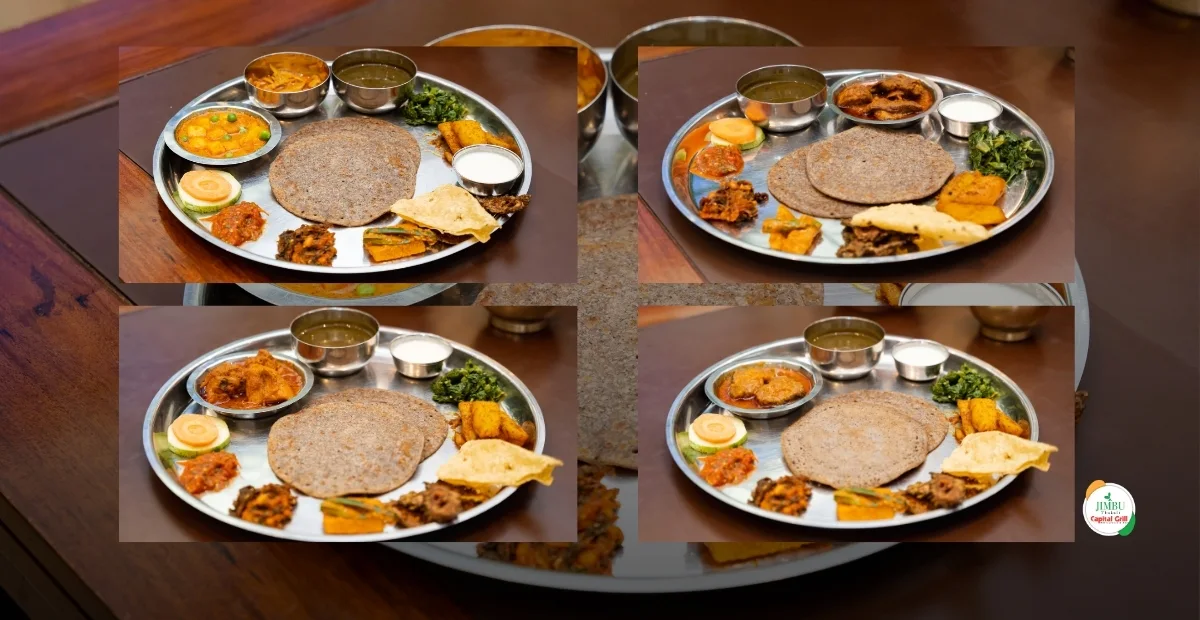
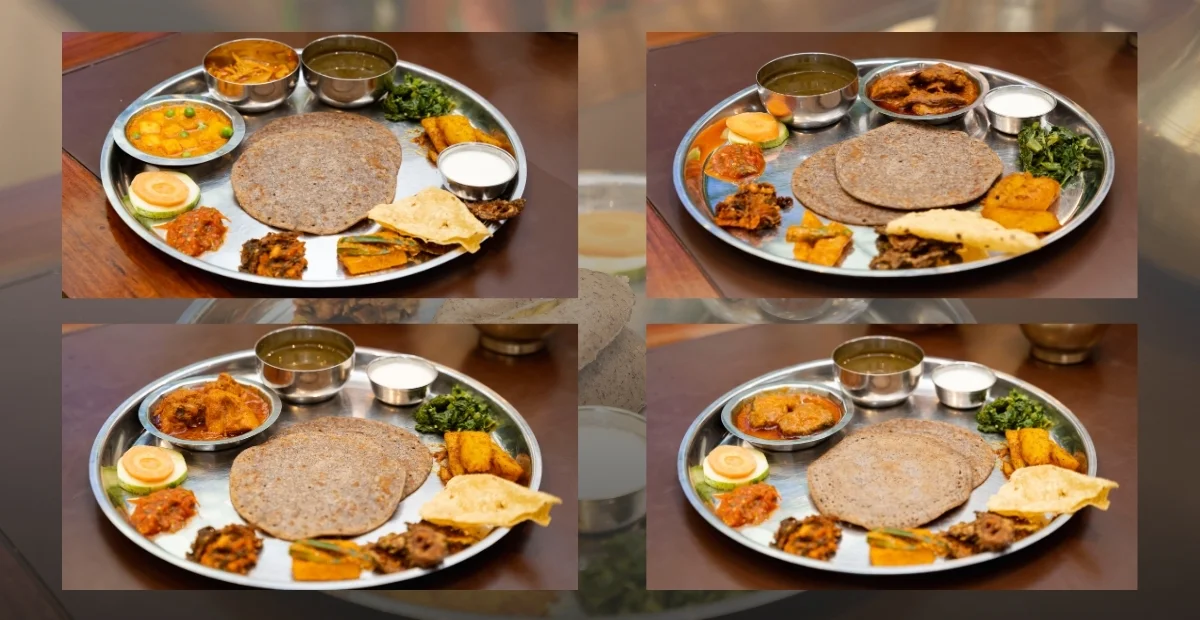
The Ghoken thali is available in four main types:
- Veg Ghoken Thali
- Chicken Ghoken Thali
- Mutton Ghoken Thali
- Fish Ghoken Thali
The Ghoken's base is the same in all varieties, but diners can choose their favorite protein source while keeping it traditional.
Nutritional Value of Ghoken Thali
The nutritional value of ghoken thali is derived from the buckwheat used. Buckwheat is recognized as having the following benefits:
- Higher dietary fiber
- Slow-digesting carbohydrates
- Better satiety and fullness
This makes ghoken thali a steady, practical meal rather than a heavy or indulgent one.
Why Ghoken Is Considered a Himalayan Power Food?
Ghoken is often referred to as Himalayan power food because it was built for life in the hills. Buckwheat grows well in higher altitudes, ghee provides concentrated energy, and the quick cooking method suits physically demanding routines.
Farmers, porters, and households relied on ghoken for fuel that lasted through long days of labor. Its simplicity, speed, and sustaining quality are exactly why it earned its reputation.
How to Eat Ghoken (Traditional & Practical Way)
Ghoken is best enjoyed hot, straight from the pan. Traditionally, it is:
- Torn or cut into pieces
- Paired with meat curries or gravies
- Eaten slowly to appreciate the ghee aroma and texture
Because of its neutral flavor, ghoken works best when combined with richer side dishes rather than eaten alone.
Where to Eat Authentic Ghoken Thali in Nepal
For an authentic ghoken thali experience, Jimbu Thakali by Capital Grill is a trusted destination. The restaurant is known for preserving traditional Thakali and hill-style Nepali meals.
Ghoken thali is available at the following branches:
To determine the authenticity of Ghoken thali, one should check:
- The size and roundness of Ghoken.
- The presence of ghee shines.
- Presence of softness without dryness.
- Presence of Ghoken with meat items.
Final Thoughts on Ghoken Thali
Ghoken thali is not flashy, complex, or heavily spiced. That is its strength. It represents hill food culture at its most honest—buckwheat, ghee, speed, and balance. As a Nepali buckwheat dish, it carries history, practicality, and nourishment in equal measure.
At Jimbu Thakali by Capital Grill, ghoken thali is served with care, consistency, and respect for tradition. For anyone looking to experience authentic Nepali food beyond the usual, ghoken thali is a meal worth choosing.