The Daal Bhaat Affliction
2nd June, 2025
The Daal Bhaat affliction
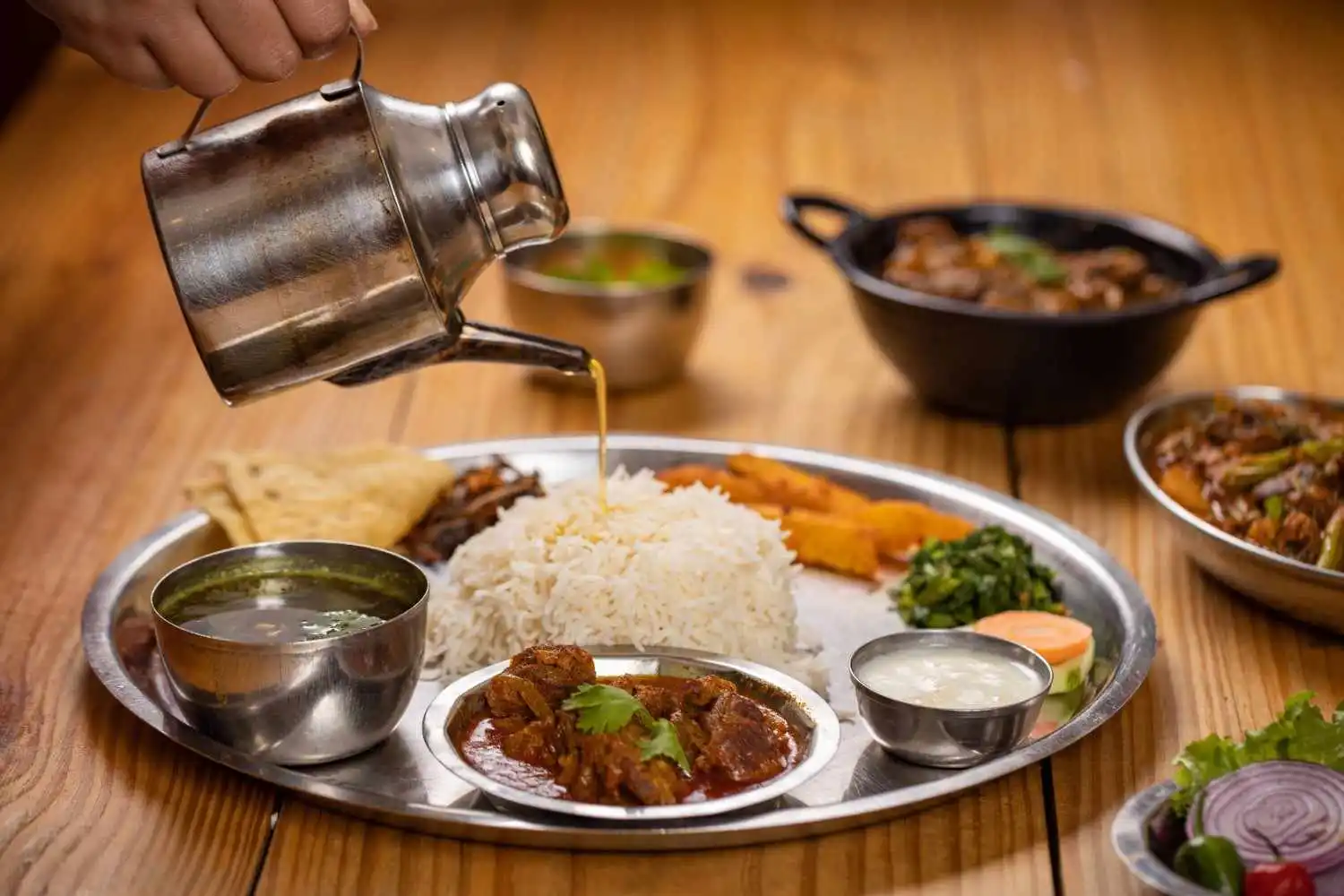
Ask a hill native living predominantly on fast and instant food, “What do you crave?” Tato bhaat, kalo daal ,alu tareko and golbheda ko twaakaa pareko achar, (translation: Steaming rice, black lentil , fried potatoes, jhaneko saag and tomato pickle) has to be the answer at least 90% of the time. What is so special you may ask, let me reply in paragraphs in attempt to tantalize your taste buds, revoke memories from good old no processed food days and definitely answer our query.
Carbs Consumption
Rice is the staple diet of people in Nepal. According to data collected in 2014, the total rice consumption in Nepal in a year is 3.72 million tones. The Himalayan region where rice farming isn’t possible the carb is replaced by Maize (makai), buckwheat (fapar), barley (jau), or millet (kodo) become porridge-like (dhido or ato).
Potatoes are another important staple crop and food.
The Khas and thakali cuisine
Dal-bhat-tarkari is the standard meal eaten twice daily traditionally by the Khas people They Even Call it Nepali khana.
Thakali cuisine—transitional between Himalayan and lowland cuisines—is eaten by Thakali people living in Thak-Khola Valley, an ancient and relatively easy trade route through the high Himalaya.
This popular cuisine is now celebrated and enjoyed across Nepal and other places Nepali people have immigrated to.
The Content
Like any Nepali diet, the star of the dish is the Carb, be it rice or dhido (buckwheat),traditional methods are used to plant an astounding variety of rice including Gudgude Marsi, Thauli, Mansara, Anadi, Rajbhog, Krishna bhog, Samundra Pheenz, Phalame.
There are four main Nepali rice found in Kathmandu: Mansuli, Pokhreli, Jeera Maseeno and several varieties of Basmati. The most popular is Mansuli which is cheaper with higher yields. Pokhreli and Jeera Maseeno are more popular among the middle- and higher-middle class, while Basmati varies according to quality.
Dhindo is traditionally prepared from buckwheat or millet but wheat, corn flour is common as well. Just ground the flour and add water.
Nutrition: White rice is about 90 percent carbohydrate, 8 percent protein and 2 percent fat. White rice is a good source of magnesium, phosphorus, manganese, selenium, iron, folic acid, thiamine and niacin.
Trivia: The International Rice Research Institute (IRRI) in the Philippines preserves 1,800 local Nepali rice germ plasm in a refrigerated earthquake-proof vault. The gene bank includes the rich Tilki from Dang and the aromatic Jetho Budo from Pokhara.
You Might Also Be interested in Significance of Toran-La (jimbuthakali.com)
The Curries
Seasonal vegetables are preferred since they taste the best. Be it cauliflower, and green leafy vegetables. The greens are sautéed in sesame oil with red chilies and again garlic and are eaten while it’s still crispy.
But nothing holds torch to the beloved potatoes. Fried with assortment of spices, Mustang alu (potatoes) are the go to dishes for snacks as well with rice.
The non-vegetarians have choicest options from chicken, mutton, fish and chyangra. These are usually prepared as curries and taste heavenly with the rice because of the mixture of spices and ingredients like onion, garlic, ginger, garam masala, jeera masala, chilli powder, coriander powder, cumin seed and turmeric.