Gundruk in Thakali Thali: What It Is and Why It Matters
6th November, 2026
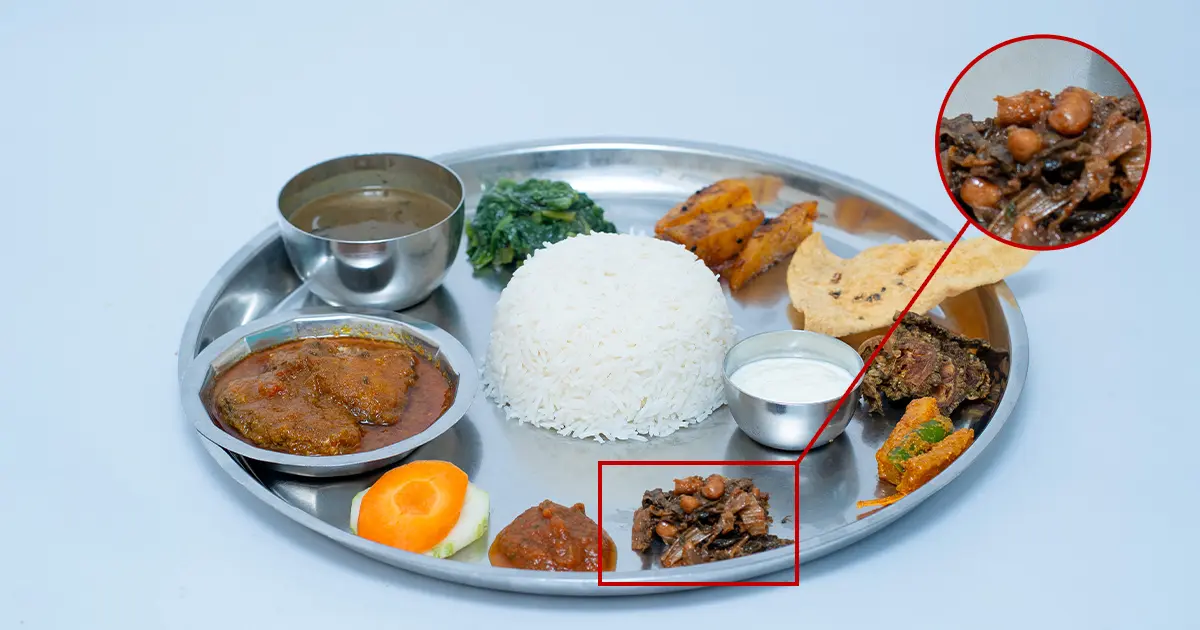
Gundruk in a Thakali Thali is a serving of fermented and dried leafy greens, usually mustard, radish or cauliflower leaves, prepared as a pickled side dish. It brings a sour, earthy and savory note to the plate, sitting alongside rice, dal, vegetables, meat and achar.
A Thakali Thali is not a collection of separate dishes that happen to share a plate. It is built on contrast, with each item there to offset or sharpen the others. Gundruk is the one that supplies fermented tang.
This guide covers what gundruk is, how it is made and what it tastes like, then looks closely at what it does on a Thakali Thali and how to eat it.
What Is Gundruk?
Gundruk is a traditional Nepali fermented and dried leafy vegetable made from greens such as mustard, radish, or cauliflower leaves. The leaves sour through natural fermentation and are then dried, so they keep well beyond the fresh season.
There is no single authentic recipe. The choice of leaves, the length of fermentation, and the way the greens are dried all change from one household and region to the next. Two batches rarely taste the same.
The quickest way to place gundruk is to set it beside saag, the other leafy green on a Thakali plate.
How Is Gundruk Traditionally Made?

Gundruk is made by wilting leafy greens, packing them tightly so they ferment on their own, and then drying them in the sun. Nothing is added to start the souring. Bacteria already present on the leaves produce lactic acid, which is why researchers describe gundruk as a lactic acid-fermented food.
- Harvest: Leafy greens are gathered, often the tops, left over once mustard, radish, or cauliflower has been picked.
- Wilt: The leaves are left out until they lose some moisture and turn limp.
- Pack: The wilted leaves are pressed firmly into a container so that little air remains.
- Ferment: The container is kept warm for several days while the leaves turn sour.
- Dry: The fermented greens are spread out, traditionally in the sun, until fully dry.
- Store and rehydrate: Dried gundruk keeps for months and is soaked before cooking.
Timings and details differ between households. What stays constant is the order, fermentation first and drying second, and that order is what separates gundruk from ordinary cooked greens.
What Does Gundruk Taste Like?
Gundruk tastes tangy and sour at first, with an earthy, savory depth underneath and a clear fermented aroma. Many people notice an umami quality too, closer to a broth than to a fresh vegetable.
How sharp it is, depends on the greens, how long they fermented, how they were dried and how they are prepared. A thin gundruk soup is gentle and aromatic. A dry, dressed gundruk with chilli and oil is more intense.
On a Thakali Thali that sourness has work to do. Rice is plain, dal is soft and warm, and ghee and meat are rich. A spoonful of gundruk cuts through all three and leaves you ready for the next bite.
What Role Does Gundruk Play in a Thakali Thali?

Gundruk is served in a Thakali Thali because the meal needs a sour, fermented element to balance its milder and richer parts. It is not there as one more vegetable. Take it away and the plate still fills you up, but it tastes flatter.
Each of the Thakali Thali components has its own job:
- Bhat (rice)/Dhido/Ghoken is the neutral base that everything else is eaten with.
- Dal adds warmth and richness.
- Masu (meat) brings savory depth.
- Aloo fry gives a spicy, comforting texture.
- Karela fry contributes to bitterness.
- Achar adds acidity and heat.
- Saag provides a fresh, leafy-green flavor.
- Gundruk contributes fermented tanginess and depth.
To learn more about Thakali Thali, read What Comes in a Thakali Thali Blog.
Gundruk vs Saag in Thakali Thali: What Is the Difference?

Gundruk is fermented and dried leafy greens, while saag is fresh leafy greens cooked the same day. Both start as leaves, which is why first-time diners often mix them up, but they taste nothing alike.
| Gundruk | Saag | |
| What it is | Fermented leafy greens | Fresh leafy greens |
| Preparation | Fermented before serving | Usually cooked fresh |
| Flavour | Tangy and sour | Fresh and vegetal |
| Storage | Often dried and stored | Usually eaten fresh |
| Role on the thali | Adds fermented acidity | Adds green, vegetal character |
A Thakali Thali can carry both because they do different things. Saag keeps the plate fresh. Gundruk gives it its sour edge.
How Is Gundruk Served in a Thakali Thali?

Gundruk usually arrives in one of two forms. The first is gundruk ko jhol, a thin, sour soup served in a small bowl. The second is a dry side, often called gundruk achar or gundruk sadeko, where the rehydrated greens are dressed in spices.
Restaurants differ, and so do home kitchens. At Jimbu Thakali, gundruk is served as a dry pickled side.
If it is your first time, here is how to eat gundruk in a Thakali Thali:
- Spoon a little over your rice, as you would with dal.
- Take it alongside the dal and notice how the sourness lifts it.
- Mix a small amount with other sides, such as aloo or saag.
- Have a bite between mouthfuls of meat or ghee-rich rice.
Why Is Gundruk Important in Nepali Food Culture?
Gundruk matters in Nepal because it turned a short season of leafy greens into food that lasts the year. Fermenting and drying meant a household could keep its surplus leaves long after the fields were bare. That habit of preserving at home is still part of everyday cooking.
It also explains why gundruk feels so familiar to Nepalis. For many people it is the taste of a home kitchen, not a restaurant specialty.
Gundruk is not uniquely Thakali. Although it is enjoyed across Nepal, its presence in a Thakali Thali shows how preserved and fermented foods fit naturally into Nepal's diverse food traditions.
Gundruk and the Flavour Balance of a Thakali Thali
Gundruk matters in a Thakali Thali because it is the tangy point in a meal built on contrast. Every flavour on the plate has a counterpart:
- Tangy: gundruk
- Rich: ghee and dal
- Savoury: masu
- Spicy: achar and seasonings
- Bitter: karela
- Fresh: saag
- Neutral: rice
You are not meant to finish one item and move to the next. You eat across the plate, a little rice with dal, then meat, then something sour or bitter. Much of the appeal of Thakali food comes from tasting these flavours together.
Is Gundruk Healthy?
Gundruk can be part of a balanced meal, since it is made from leafy greens and is usually eaten in small portions with rice, dal, and vegetables. Leafy greens contribute fibre and minerals, and fermentation changes their flavor and acidity.
Gundruk is often described as probiotic, but drying and cooking affect live microorganisms, so a cooked restaurant serving should not be assumed to deliver them.
The plainest way to see it is as a traditional preserved vegetable that makes greens usable out of season. It is food, not medicine.
Gundruk at Jimbu Thakali

At Jimbu Thakali, gundruk is one of the 12 components of the regular Thakali Thali. It is served as part of the full plate, alongside the rice, dal, meat, vegetables, and achar.
That reflects how the restaurant approaches Thakali food in general. The thali is treated as one complete meal, and each side is there because of what it adds to the others.
If you would like to try Gundruk the way it is meant to be eaten, you can visit any of the Jimbu Thakali’s outlets, like
Conclusion: Why Gundruk Belongs on a Thakali Thali
Gundruk is more than a side item. Its sour, earthy, fermented character gives the Thakali Thali a contrast that no other component provides, and it carries a long Nepali tradition of preserving greens.
Frequently Asked Questions About Gundruk in Thakali Thali
What Is Gundruk in Thakali Thali?
Gundruk in a Thakali Thali is a small serving of fermented and dried leafy greens, prepared as a pickled side. It adds a sour, earthy flavor that balances the rice, dal, meat, and ghee on the plate.
What Is Gundruk Made From?
Gundruk is made from leafy greens, most commonly mustard, radish and cauliflower leaves. The leaves are wilted, fermented naturally, and then dried.
What Does Gundruk Taste Like?
Gundruk tastes tangy and sour, with an earthy, savory depth and a fermented aroma. Its strength varies with the greens used and how it is prepared. A soup is milder than a dry, spiced side.
Is Gundruk the Same As Saag?
No. Gundruk is leafy greens that have been fermented and dried, while saag is fresh leafy greens cooked as a vegetable. Gundruk tastes sour and fermented. Saag tastes fresh and green. A Thakali Thali often includes both.
Is Gundruk a Thakali Food?
Gundruk is a traditional Nepali food eaten across the country, not a dish exclusive to the Thakali community. It is, however, a regular component of the Thakali Thali, where its sourness balances the richer items.
How Is Gundruk Served in a Thakali Thali?
Gundruk is usually served as a dry-dressed side, such as gundruk achar.
How Do You Eat Gundruk With Thakali Thali?
Eat gundruk in small amounts with your rice. Spoon a little over the rice, have it alongside dal, or take a bite between mouthfuls of meat and other rich sides. It works as a contrast.
Is Gundruk Healthy?
Gundruk can be part of a balanced meal because it is made from leafy greens and eaten in modest portions. Fermentation changes its flavour and acidity. Claims about probiotics should be treated with care, since drying and cooking affect live microorganisms.