What Comes in a Thakali Thali? Every Item on the Plate, Explained
19th August, 2026
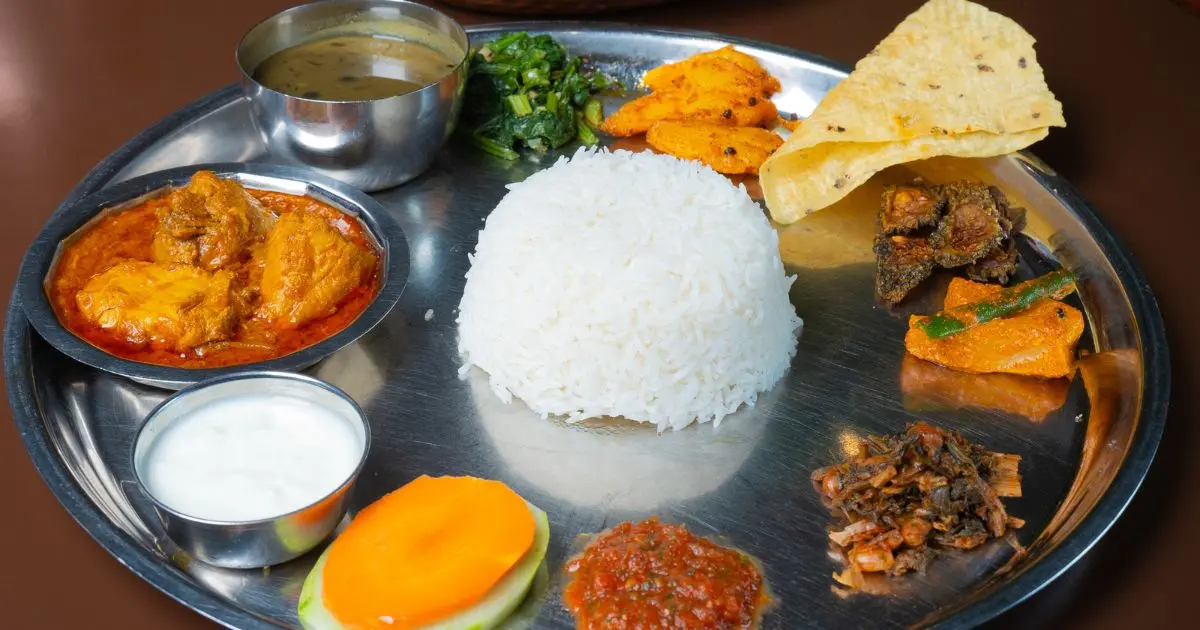
A regular Thakali thali is a set meal of 12 items served together on one metal tray: bhat (steamed rice), dal (black lentil soup), aloo fry (spiced potato fry), karela fry (crisp bitter gourd), masu (meat curry), saag (sautéed greens), gundruk (fermented greens), two achar (tomato and radish pickles), dahi (yoghurt), papad (lentil wafer) and a small raw salad, all finished with a spoon of ghee over the rice and dal.
The tray lands with a soft clatter, three or four little steel bowls; rice heaped in the middle, hot ghee and timur rising off the dal before you have picked up a spoon. This guide covers every component present in the Thakali Thali.
What Is a Thakali Thali?
A Thakali Thali is a traditional Nepali meal associated with the Thakali people of Nepal, originally from the Thak Khola region of Mustang, the stretch of the Kali Gandaki valley holding Marpha, Tukuche, Jomsom, Larjung, Kobang and Thini. It has a balance of nutrition, texture and taste built into the tray itself, combining rice, dal, cooked vegetables, a bitter fry, greens, pickles and a meat curry in one sitting.
One note on wording, because menus are inconsistent. Thakali khana, Thakali set and Thakali thali all describe the same meal; thali refers to the metal tray itself.
The Four Thakali Thali Sets
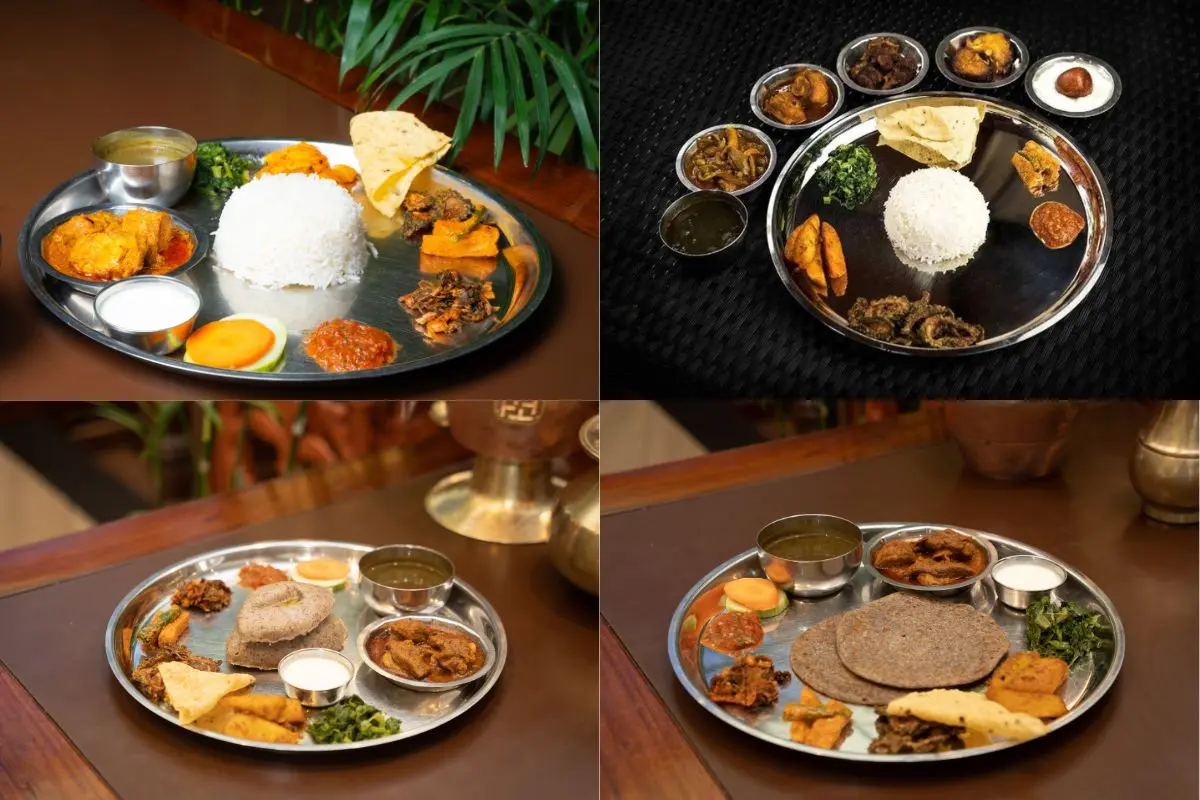
There are four sets, and the difference between them is the staple and the number of items:
- Regular Thakali thali (12 items): The standard set, served with bhat (steamed rice) as the staple.
- Dhido Thakali thali: The same set with dhido, a thick buckwheat porridge, in place of rice.
- Ghoken Thakali thali: The same set with ghoken, a dense buckwheat flatbread from Mustang, in place of rice.
- Cheli Jwai set (15 items, including dessert): The largest of the four: the full regular thali plus additional dishes and a sweet to close the meal.
What "Cheli Jwai" Means and Why the Set Carries the Name
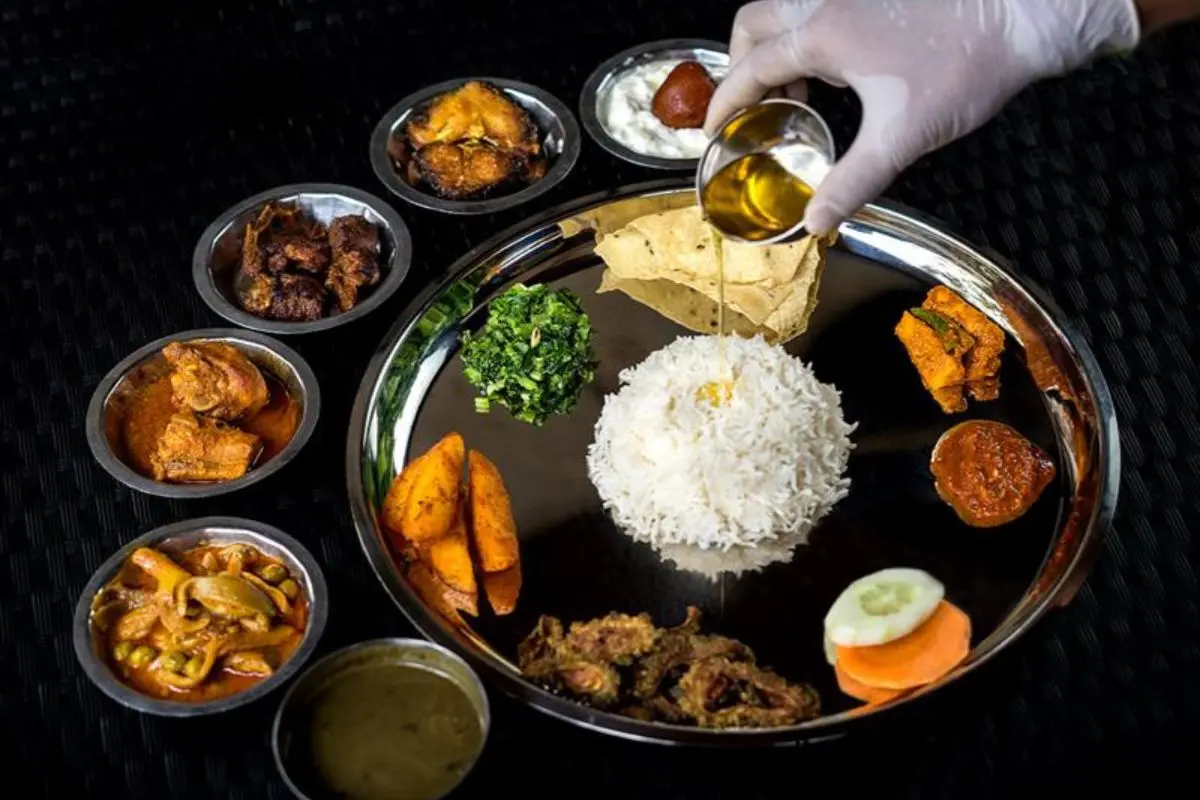
In Nepali, “cheli” is the daughter or sister of the house, and “jwai” is the son-in-law. When a cheli comes home with her jwai, the family cooks at the top of its range: the extra curries come out, the portions are generous, nothing is held back, and the meal ends with something sweet. The son-in-law is seated as the guest of honor and fed accordingly.
That hospitality is what people mean by a jwai treat—the best of the kitchen, laid on for someone the household wants to honor, expressed entirely through food rather than ceremony. The phrase is used warmly and slightly teasingly, because everyone at the table knows the jwai is getting the good plate.
The Cheli Jwai set is named for exactly that custom. At 15 items with a dessert to finish, it is the full-honour version of the thali—what a Thakali household would put in front of a daughter and son-in-law who had come a long way to visit.
The Authentic Thakali Thali: Item-by-Item Breakdown
The regular Thakali Thali set is fixed at 12 components, and it arrives complete every time rather than varying from visit to visit. Below, we have explained each item on the tray.
Bhat / Dhido / Ghoken: Steamed Rice, Buckwheat Porridge and Buckwheat Flatbread
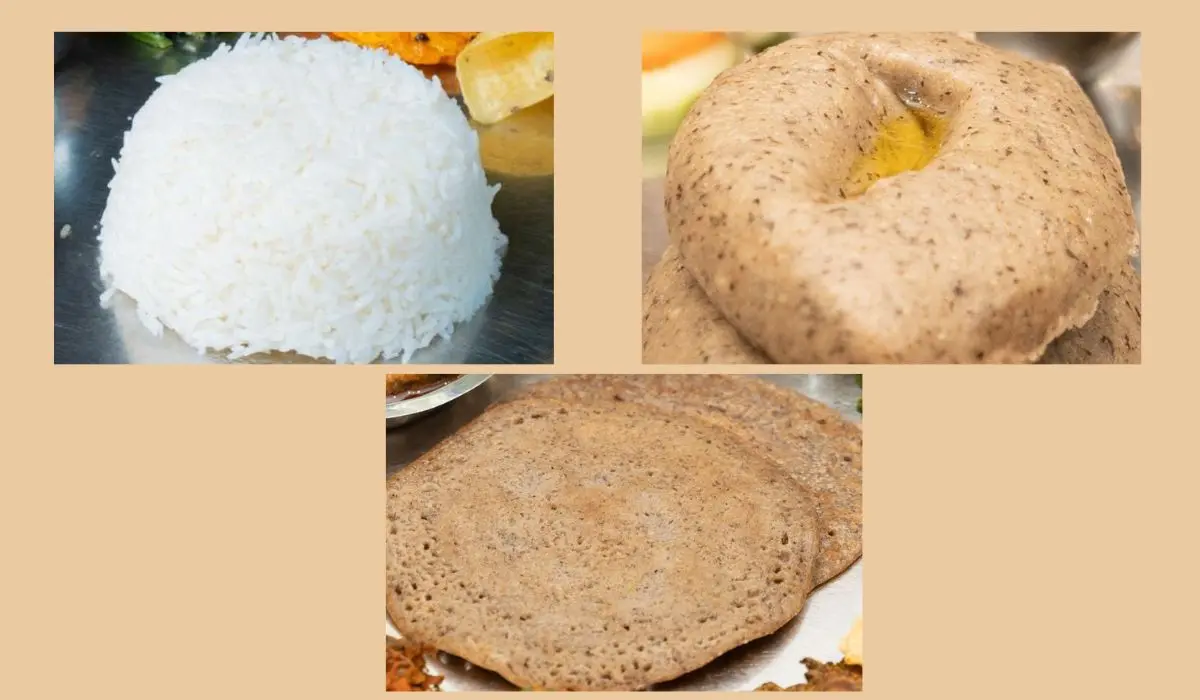
A Thakali thali comes with rice by default; dhido or ghoken is the alternative to rice. Bhat is plain steamed white rice heaped in the middle of the thali. Dhido is a thick porridge of buckwheat (phapar) flour stirred hard into boiling water until it pulls away from the pot. You do not chew it; you tear off a piece, dent it with your thumb, dip it in dal and swallow. Ghoken is a buckwheat flatbread native to Mustang, closer to a dense pancake.
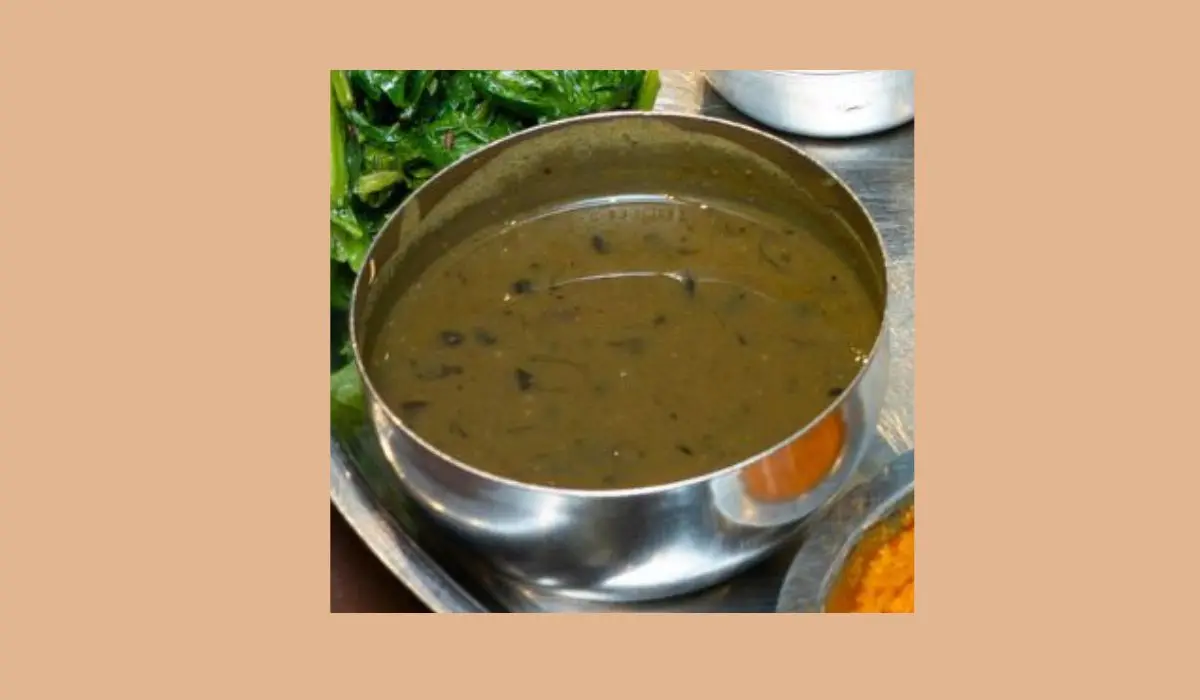
Dal (Lentil Soup)
Thakali dal is the black lentil (mas ko dal), cooked with Thakali spices and water into a soup that is neither thick nor thin. It tastes different from regular dal because of jimbu: a dried Himalayan herb of the onion family (Allium hypsistum) bloomed in hot ghee and poured over the finished dal. Thakali dal is eaten by pouring it over a portion of the rice rather than spooned separately from the bowl.
Aloo Fry (Potato Fry)
Aloo fry is the potato dish on the tray and the one most people finish first. Potatoes are cut into thick wedges and fried with turmeric, cumin, a little chilli, and timur until the outsides catch and go golden while the insides stay soft.
On the tray it does the mild, steady job: warm, faintly smoky, salty enough to eat on its own, and the thing you reach for between mouthfuls of something sharper.
It also sets up the karela. The two fries arrive side by side on purpose; one soft and mild while one crisp and bitter and eating them in alternation is how the plate is meant to work.
Karela Fry (Crisp Bitter Gourd)
Karela fry is the signature item on the tray, and the one most first-timers remember. Bitter gourd is sliced thin, salted to draw off some of its harshness, then pan-fried with turmeric and a little chilli until the edges go dark and crisp.
The taste is genuinely bitter, and that is the point. Bitterness is a recognised flavour in its own right in Nepali cooking, and on a plate carrying sour gundruk, sharp achar, mild aloo fry and rich dal, karela fills the one gap the rest of the tray leaves open. Eat it in small pieces against a mouthful of plain rice; the starch takes the edge off, and the crispness holds up.
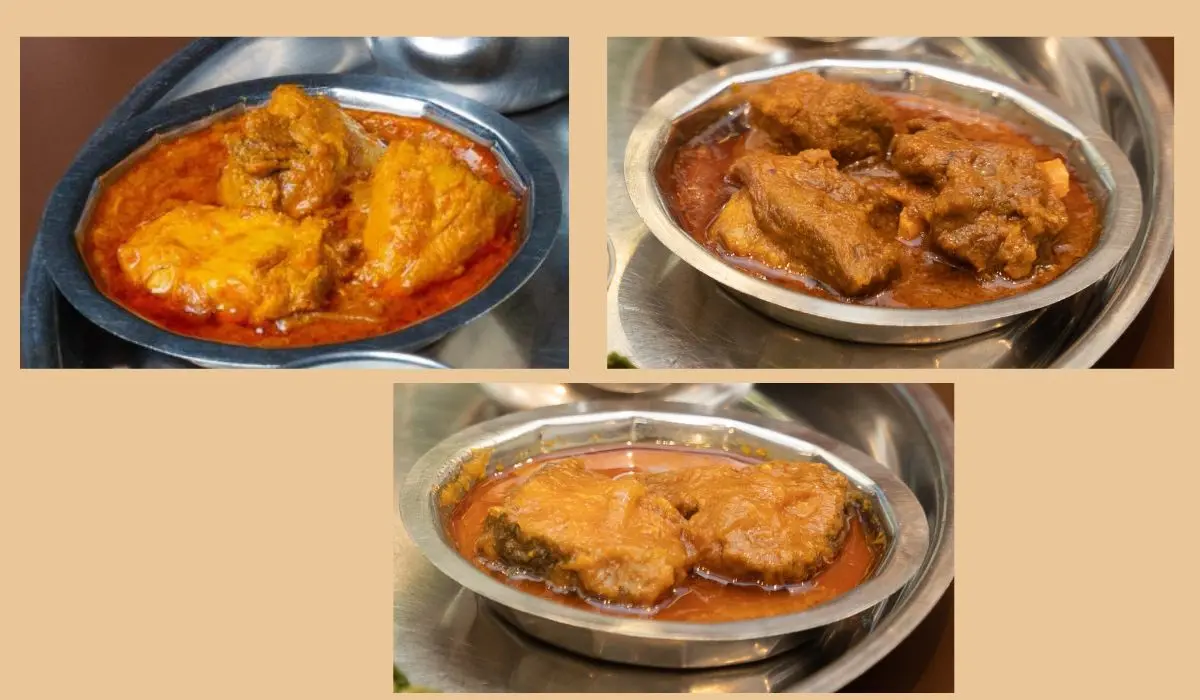
Masu: Meat Curry (Mutton, Chicken or Fish)
Mutton (khasi ko masu, goat meat) is the classic Thakali choice, with chicken as the common option and fish appearing along the Kali Gandaki corridor and in city restaurants. Buffalo turns up in some kitchens, pork in a few. The style is distinct: bone-in pieces, a modest amount of dark gravy rather than a pool of sauce, cooked with mustard oil, timur and local spice. It works as a flavour component alongside the rice and dal rather than a centerpiece.
Saag (Sautéed Leafy Greens)
Saag is fresh leafy greens, generally mustard leaf (rayo) or spinach (palungo) which is quick fried with garlic, sometimes a pinch of fenugreek seed, and a little oil. Many confuse it with gundruk, so: saag is fresh and cooked; gundruk is fermented and dried. Saag arrives soft and glossy, mildly bitter, with the clean vegetal bite of mustard leaf behind the garlic.
Gundruk (Fermented Greens)
Gundruk is a fermented, sun-dried leafy green, made by pressing fresh mustard or radish leaves into a sealed container to ferment for one to two weeks and then drying them in the sun. It is served on the thali as a thin soup (gundruk ko jhol) or a dry pickled side (gundruk ko achar).
The result is sour, funky and intensely savoury. This is the most polarising item on the tray for first timers, so try it mixed into rice rather than alone, since the sourness is built to work against a bland starch.
Achar (The Tomato Pickle and the Fermented Radish Pickle)
Two pickles come standard. Golbheda ko achar is a cooked tomato pickle, often blended with roasted sesame or timur — sharp and slightly smoky. Mula ko achar is fermented or sun-dried radish, sour and pungent, a Mustang winter staple built on the same preservation logic as gundruk.
The faint numbing tingle across your tongue is timur, Nepali Sichuan pepper (Zanthoxylum armatum), and it is a different sensation entirely from chilli heat.
Dahi (Yoghurt)
Dahi is made by fermenting buffalo or cow milk with live cultures, and it is usually lightly sweetened. Its role is functional: it cools the mouth after the achar, the karela and the timur, and most diners save it for the end and mix it into the last few spoonfuls of rice.
Ghee (Clarified Butter)
Ghee is clarified butter, made by simmering butter until the water evaporates and the milk solids separate and turn golden brown. A small spoon goes over the rice or dhido and the dal as the tray is served. It carries a rich, nutty flavour through the plate and is the reason the first mouthful of rice tastes more than rice.
Papad (Crisp Lentil Wafer)
A thin lentil-flour wafer, flame-roasted or deep-fried, served whole or snapped across the rice. Its job is texture and crispiness, alongside the karela fry, on an otherwise soft plate.
Salad
Simple raw vegetables like cucumber, carrot, radish and tomato, occasionally raw onion and lemon, cut into thick slices. It is a palate cleanser rather than a course.
Veg vs Non-Veg Thakali Thali: What Changes on the Plate
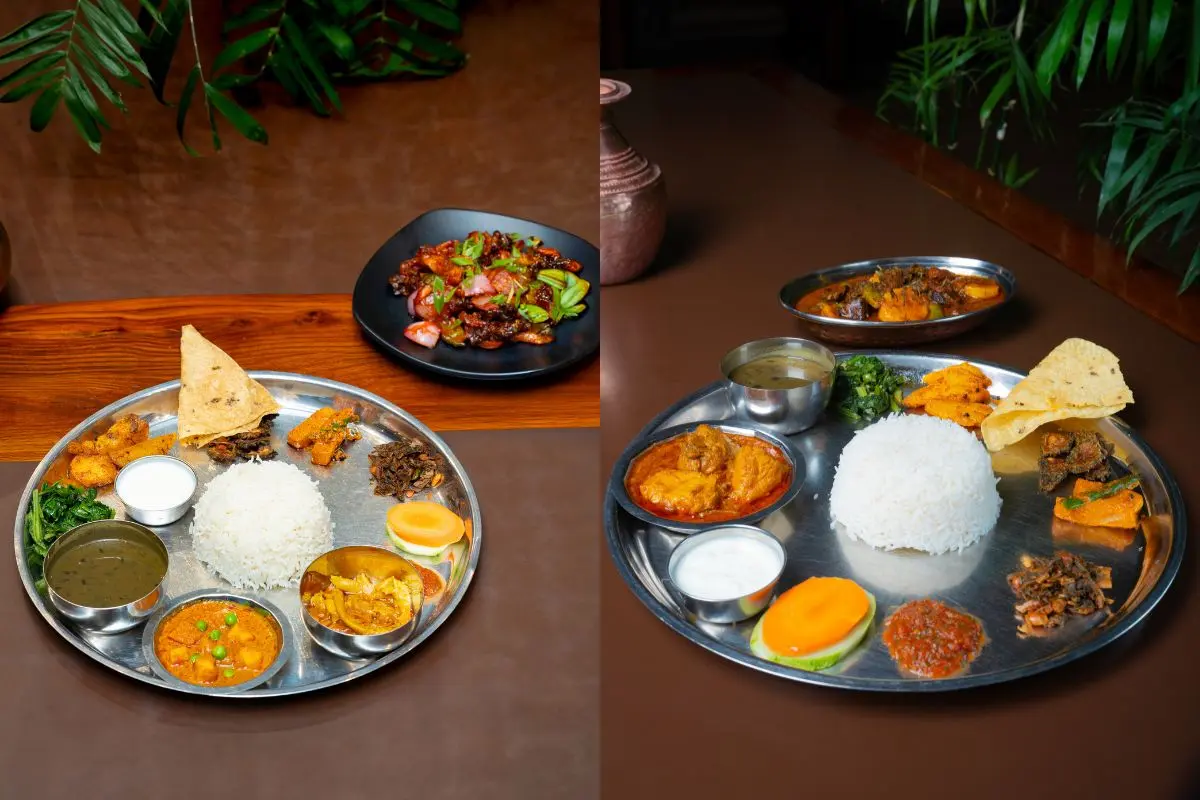
A vegetarian Thakali thali keeps every component except the meat curry, and most kitchens replace it with an extra vegetable dish such as paneer curry or mushroom curry. The item count stays the same.
| Component | Veg thali | Non-veg thali | Notes for vegans |
| Bhat / dhido / ghoken | Included | Included | Vegan |
| Dal | Included | Included | Ask for oil tempering, not ghee |
| Aloo fry | Included | Included | Usually vegan; confirm the frying fat |
| Karela fry | Included | Included | Usually vegan; confirm the frying fat |
| Masu | Replaced with paneer or mushroom curry | Mutton, chicken or fish curry | Ask for an extra vegetable dish |
| Saag / gundruk | Included | Included | Usually vegan |
| Achar | Included | Included | Usually vegan; confirm no curd base |
| Dahi | Included | Included | Ask to omit |
| Ghee | Included | Included | Ask to omit |
| Papad, salad | Included | Included | Vegan |
How the Thali Is Arranged and Served
Everything arrives at once; there are no courses. Rice sits in the center of the plate while the small bowls hold dal, masu (for Veg options, paneer and mushroom curry) and dahi. The aloo fry, karela fry and papad sit on the tray itself, where they will stay crisp, and the achar and gundruk go at the rim in the smallest portions because they are accents rather than dishes.
The Traditional Brass or Steel Thali Layout
The tray was traditionally brass or bell-metal; today stainless steel is standard, either as a flat tray holding separate small bowls or a single stamped plate with moulded compartments. Some heritage-style restaurants still serve on brass, which changes nothing about the food and a great deal about the photograph, while some Kathmandu restaurants serve the Thakali set on one large stainless-steel plate.
Thakali Thali vs Regular Dal Bhat: A Side-by-Side Comparison
Both are rice-and-lentil set meals, and a Thakali thali is a type of dal bhat rather than a rival to it. The difference is that the Thakali version carries more components, a distinct jimbu-and-timur flavour profile and a fixed regional identity, while "dal bhat" describes the whole national category.
| Feature | Thakali Thali | Regular Dal Bhat |
| Typical item count | 12 components (15 in the Cheli Jwai set) | 4–6 components |
| Dal style | Black lentil, jimbu-tempered in ghee | Often yellow lentil, thin in texture |
| Signature aromatics | Jimbu, timur, ghee | Cumin, garlic, chilli, regional variation |
| Vegetable sides | Aloo fry, karela fry, saag and gundruk | Usually one vegetable curry |
| Pickles | Two standards: tomato and radish | Usually one, sometimes none |
| Meat | Mutton by default; chicken and fish common | Mutton or chicken |
| Buckwheat options | Dhido and ghoken available | Only rice |
| Where you find it | Thakali restaurants, Mustang | Every kitchen in Nepal, every lodge |
What a Thakali Thali Gives You Nutritionally
The meal is carbohydrate-led and built on a classic pairing: rice and lentils eaten together supply complementary plant protein. The plate is high in fibre from lentils, vegetables and greens, the karela and saag add bulk for very few calories, the fermented components (gundruk, dahi, mula ko achar) are high in sodium, and ghee and meat add fat and calorie density that matters in cold weather at altitude.
What Does a Thakali Thali Cost?
The price depends on the set you order. A veg thali costs less than a chicken, mutton or fish thali, and the Cheli Jwai set sits at the top of the range because it carries 15 items and a dessert. Restaurant type and altitude matter too: thalis cost more in high-altitude restaurants, while Kathmandu prices vary widely. Authentic Thakali restaurants generally run from Rs 600 to Rs 1,000 per set, while a basic Thakali meal can be found for as little as Rs 250, usually with compromises in ingredients and hygiene that show up on the plate.
Some restaurants charge for extra refills of rice, dal, vegetables and achar; others include them. At Jimbu Thakali, refills are included in the original price, ingredients are fresh, and hygiene is a stated priority. So, if you want to try an authentic thakali thali set, you can visit Jimbu Thakali. It has four outlets in total in the Kathmandu Valley and India. They are:
How to Eat a Thakali Thali the Local Way
- Wash your hands first: Most restaurants have a basin in the dining room, not the bathroom. This is a hands-on meal, and using it is the normal first step.
- Add the ghee before anything else: Stir it into the hot rice while it is still steaming, so it melts through rather than sitting on top.
- Pour the dal over a portion of the rice, not all of it: Wet a third and keep the rest dry for the next round; drowning the plate makes the second half of the meal soggy.
- Mix with the fingertips of your right hand: Mix dal and rice into loose mouthfuls at the front of the plate. The left hand stays off the food.
- Work through the plate in sections: Rice and dal, then rice and aloo fry, then rice and masu, rather than combining everything into one mixture. Each pairing tastes different, which is why they arrive separately.
- Take the karela fry between richer mouthfuls: A piece after the masu resets the palate; a piece on its own at the start is a lot to take on.
- Treat achar and gundruk as accents: A fingertip at a time, mixed into a mouthful of rice.
- Save the dahi for the end: Mix it into the final spoonfuls of rice to close the meal and settle the timur.
- Answer refills clearly: Ask for a refill when you want one or simply nod when the server offers.
None of this is compulsory for visitors; cutlery is available everywhere, and asking for a spoon is entirely ordinary.
Conclusion
A Thakali thali is a complete meal with twelve moving parts, each doing a job: rice for bulk, jimbu-tempered dal for flavour, aloo fry for warmth and saag for freshness, karela fry for bitterness and crunch, gundruk and achar for sourness and bite, dahi and ghee for balance, papad for texture while the Cheli Jwai set contain 15 dishes, dessert included.
It is also the meal you will eat most often in Nepal's mountains. If you are planning a trip to Nepal, or you are already here, the Thakali thali is a must-try.
Frequently Asked Questions
How Many Items Come in a Thakali Thali?
The regular Thakali thali has 12 components: bhat, dal, aloo fry, karela fry, masu (veg set substitute paneer or mushroom curry), saag, gundruk, tomato achar, radish achar, dahi, papad, and salad, served with ghee and with dhido or ghoken available in place of rice. The Cheli Jwai Thakali Thali set has 15 items and finishes with a dessert.
What Is the Cheli Jwai Thakali Thali Set?
It is the 15-item set, named after the Nepali custom of honoring a jwai (son-in-law) who visits with the cheli (daughter of the house) by serving the very best the kitchen can produce. That treatment is what a "jwai treat" means: extra dishes, generous portions, and a sweet to finish.
Is a Thakali Thali Always Non-Vegetarian?
No. The vegetarian set includes every component except the meat curry. Common substitutions are paneer or mushroom curry.
Is Thakali Thali Spicy?
Moderate rather than fiery. The heat lives almost entirely in the achar, not the dal, the fries, or the masu, so you can control the spice level simply by eating less pickle. The rest of the plate is mild by default.
The tingling numbness people describe as "spicy" is usually timur, Nepali Sichuan pepper, rather than chilli.
Why Is There Bitter Gourd on the Plate?
Bitterness is a deliberate flavor in Nepali cooking, not an accident. Karela fry gives the tray a bitter, crisp element that balances the rich dal, the sour gundruk, and the mild aloo fry. Take it in small pieces with rice if it is new to you.
Is Thakali Thali Gluten-Free?
The core components that are rice, dhido, ghoken, dal, aloo fry, karela fry, masu, saag, gundruk, achar, dahi, and ghee contain no gluten-bearing grains. Papad, if it is not lentil-based, may contain gluten.
Is a Thakali Thali Vegan?
Not as served. The vegetarian set includes ghee and dahi, both dairy, so vegan guests should ask for the meal without ghee and without dahi, and confirm the dal has not been tempered in ghee.