Who Are the Thakali People? Exploring Their Heritage, Food, and Lifestyle
30th September, 2026
The Thakali people are an ethnic community of Nepal whose traditional homeland is Thak Khola, a stretch of the Kali Gandaki Valley in the Mustang district. For centuries, Thakali villages sat on one of the busiest trade routes between Tibet and the Nepali hills, and that position shaped almost everything about them: their business sense, their hospitality, their festivals, and, most famously, their food.
Most people in Nepal first meet the Thakali through a plate of dal-bhat at a Thakali restaurant. But the meal is only the most visible part of a much longer story. This guide covers where the Thakali people come from, how trade shaped their lives, the language they speak, their festivals and traditions, the cuisine they are known for, and how Thakali communities live in Nepal today.
Who Are the Thakali People?
Quick answer: The Thakali are an ethnolinguistic community of Nepal, historically based in Thak Khola in southern Mustang along the Kali Gandaki River. They speak the Thakali language, a Tibeto-Burman language, alongside Nepali, and are widely known for their history in trade, their hospitality, and Thakali cuisine.
"Thakali" is not a single, uniform group. Several communities identify as Thakali, each tied to particular villages in the Kali Gandaki Valley, and their customs, dialects, and rituals differ in meaningful ways. The best-known group, the Tamhang Thakali, comes from Thak Satsae, the cluster of villages around Tukuche, Kobang, and Larjung. Others trace their roots to Marpha and to the villages of Panchgaun further north.
It would also be misleading to describe the Thakali simply as "people from Mustang." Mustang remains the heart of Thakali heritage, but many Thakali families have lived for generations in Myagdi, Pokhara, Kathmandu, Bhairahawa, Chitwan, and beyond. A Thakali identity today is as likely to be lived in a city apartment as in a stone house in Thak Khola.
Thakali Quick Facts
| Fact | Answer |
| Community | Thakali |
| Country | Nepal |
| Traditional homeland | Thak Khola, Mustang |
| Geographical association | Kali Gandaki Valley, Gandaki Province |
| Languages | Thakali and Nepali |
| Known for | Trade, hospitality, festivals, cuisine |
| Famous food | Thakali cuisine, Thakali Thali |
| Major festivals | Toran Lha, Lha Phewa, Falo |
Where Do the Thakali People Come From?
Thak Khola and the Kali Gandaki Valley
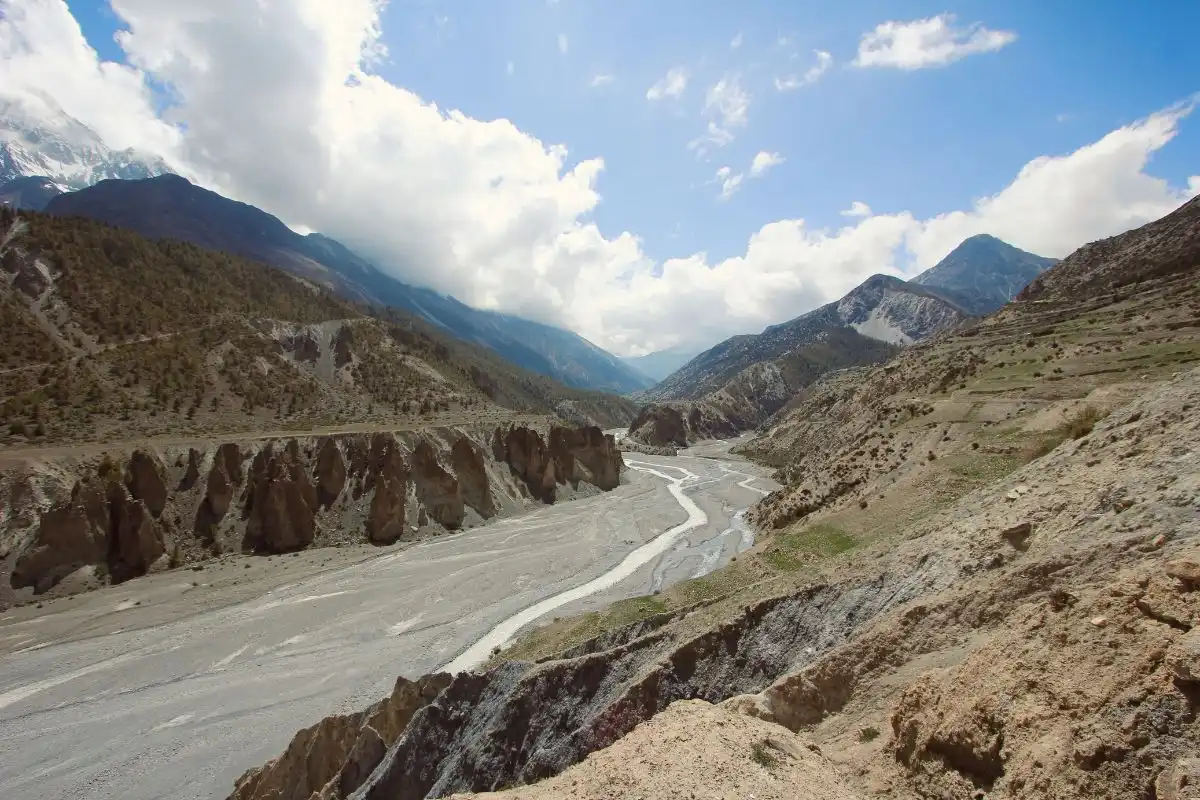
Thak Khola is the section of the Kali Gandaki Valley in southern Mustang that is historically associated with the Thakali community. Geographically, the relationship runs like this:
Nepal → Gandaki Province → Mustang → Thak Khola → Kali Gandaki Valley
Thak Khola sits in the rain shadow of Dhaulagiri and the Annapurna massif, so it is dry, windy and cold for much of the year. Rice does not grow well here. Families traditionally farmed barley, buckwheat, and potatoes on irrigated terraces, kept livestock, and looked to trade to supply what the land could not.
That environment explains a lot about Thakali society. A valley with thin soil but a steady flow of travellers rewards people who can store food well, manage money carefully, and offer a good meal and a warm bed to strangers. Kobang, in Thasang Rural Municipality, is regarded as the place where the Thakali community originated.
Mustang, Marpha, Tukuche, and Jomsom
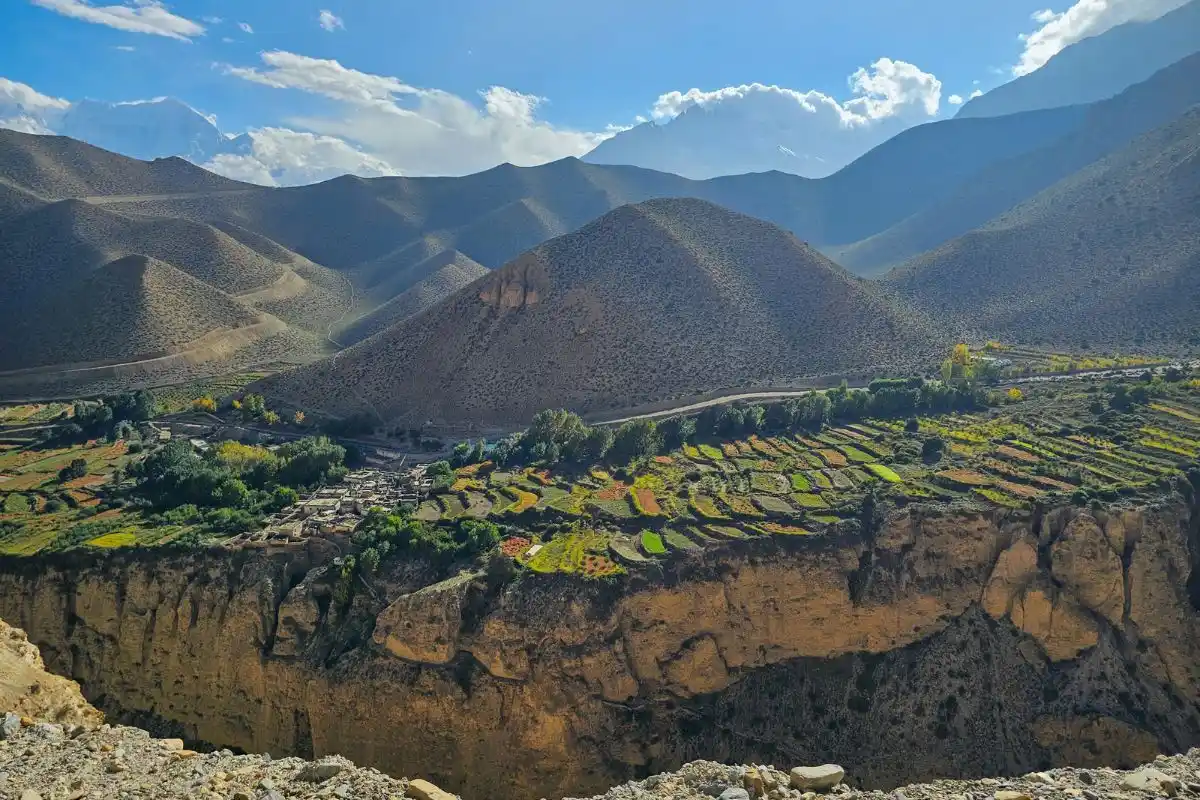
Moving up the valley from south to north, several settlements stand out in Thakali history:
- Kobang and Larjung are the ritual centers of the Tamhang Thakali. Each of the four Tamhang clans keeps a shrine to its clan deity here.
- Tukuche was once the busiest trading town in Thak Khola. Merchants stored salt, grain, and wool in its large courtyard houses, and its old mansions still show how wealthy the town became during the trade era.
- Marpha is home to the Marphali Thakali. Its whitewashed lanes, Buddhist monastery, and apple orchards make it one of the best-preserved villages in lower Mustang.
- Jomsom, the district headquarters, is today the main administrative and transport hub of Mustang, with an airport linking the valley to Pokhara.
A Brief History of the Thakali People
Much of early Thakali history is carried through oral tradition and clan chronicles rather than written records, so it helps to separate what is documented from what is remembered.
According to their own traditions, Thakali clans trace their ancestry to figures who settled in Thak Khola generations ago. Clan chronicles, called rhab, recount these origins. These accounts are sacred and culturally important, but they are not historical documents in the modern sense.
The documented history becomes clearer in the nineteenth century. As the Kali Gandaki route grew into a major channel for trade between Tibet and the middle hills of Nepal, Thakali traders became intermediaries in the exchange of Tibetan salt and wool for grain from the south. During the Rana period, leading Thakali families held the government contract to administer the salt trade in the region. The title Subba, still heard in Thakali families, dates from this era.
That trade weakened sharply in the mid-twentieth century. Political changes in Tibet after 1959 disrupted cross-border commerce, and cheaper Indian salt reached the hills through new roads. Many Thakali families responded by moving south to towns and market centers, taking their business skills and their food with them.
Thakali History at a Glance
| Period | What happened |
| Early settlement | Clans settle in Thak Khola; origins preserved in oral tradition and rhab chronicles |
| Mountain agriculture | Barley, buckwheat, livestock and terrace farming in a dry valley |
| 19th century | Kali Gandaki becomes a key Tibet–Nepal trade route; Thakali traders prosper |
| Rana era | Thakali families hold the regional salt trade contract |
| Mid-20th century | Trans-Himalayan trade declines; migration south increases |
| Late 20th century onward | Thakali communities grow in Pokhara, Kathmandu and other towns; tourism grows along the Annapurna Circuit |
| Today | A community spread across Nepal and abroad, maintaining language, festivals and cuisine |
How Did Trade Shape Thakali Culture and Lifestyle?
Trade was not the only force behind Thakali culture, but it was one of the strongest. The chain of cause and effect is easy to follow:
Geography → trade route → mobility → commerce and hospitality → cultural development
Thak Khola lay on the natural corridor between the Tibetan plateau and the lower hills. Caravans of mules and sheep carried salt south and grain north, and they needed places to rest, eat, and store goods. Thakali households along the route became innkeepers, warehouse owners, and brokers.
This had lasting effects. Running an inn meant cooking reliably for strangers, which helped build the reputation of Thakali food. Managing credit across long distances rewarded trust and organization within the community. Thakali families are well known for dhikur, a rotating credit system in which members pool money regularly and take turns receiving the lump sum. It allowed families to raise capital for businesses without banks.
Trade also brought exposure to Tibetan, Nepali hill and later Indian influences, which is part of why the Thakali religion, food, and dress combine elements from several directions. When the trade faded, these same skills of hospitality, enterprise, and cooperation carried Thakali families into hotels, restaurants, and business across Nepal.
Thakali Language and Identity
The Thakali language belongs to the Tibeto-Burman family and is closely related to Gurung, Tamang, and the languages of Manang. A sociolinguistic survey by Tribhuvan University identifies Thakali as an independent language and documents its dialect variation, multilingualism, and patterns of transmission.
There is no single, uniform Thakali dialect. Speech in Thak Satsae differs from that of Marpha and the Panchgaun villages, which reflects the internal diversity of the community.
Almost all Thakali speakers are also fluent in Nepali, and many younger Thakali people raised in cities use Nepali or English more often than Thakali at home. As a result, community organizations and families have put increasing effort into keeping the language alive through classes, cultural programs, and use during festivals. For many Thakali people, language is one of the clearest markers of identity, even when daily life happens mostly in Nepali.
Thakali Culture and Traditions
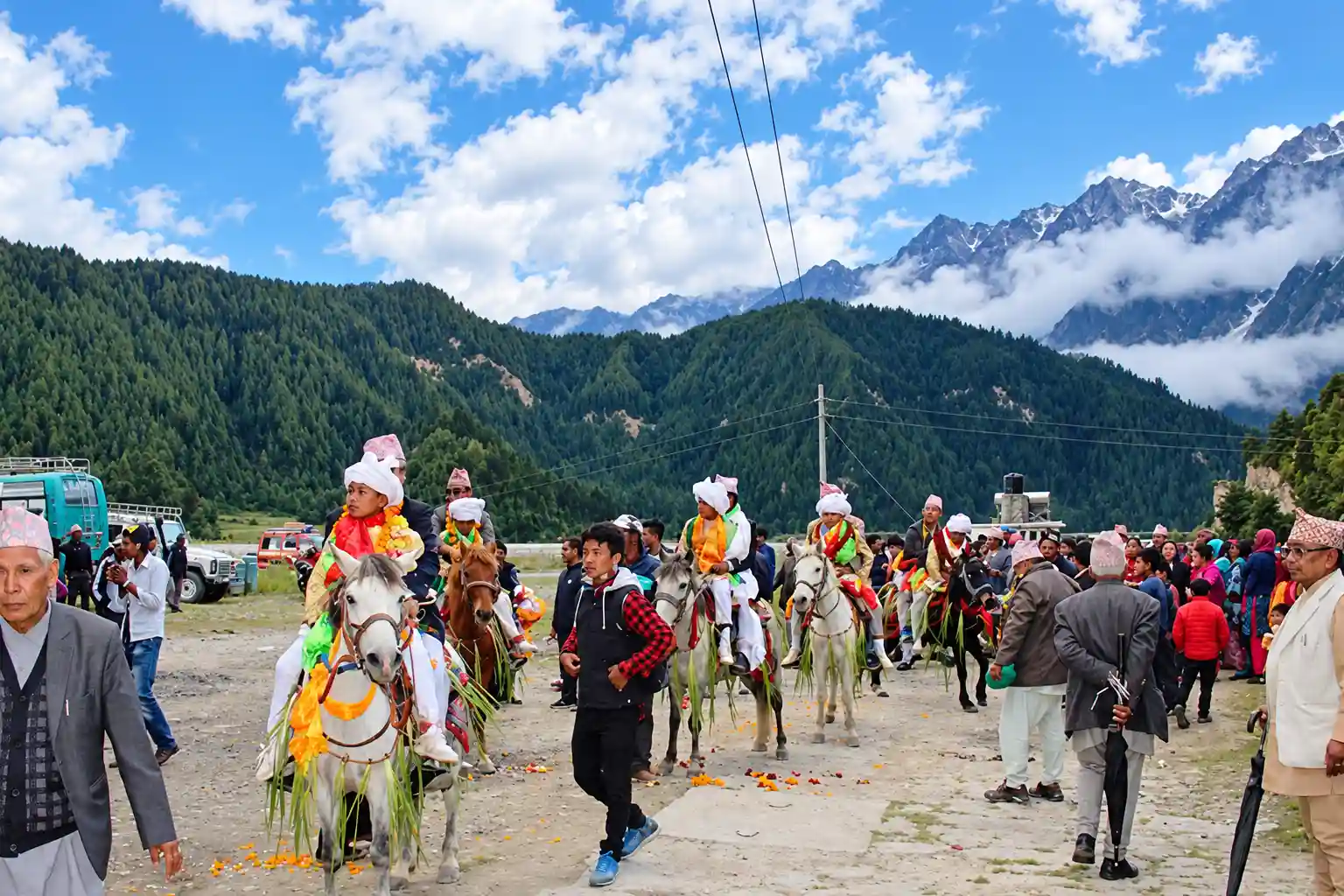
Thakali culture draws together family and clan structure, religious practice, festivals, dress, music, food, and a strong ethic of community cooperation. As families moved, married and settled in new places, their traditions adapted while keeping a recognizable core.
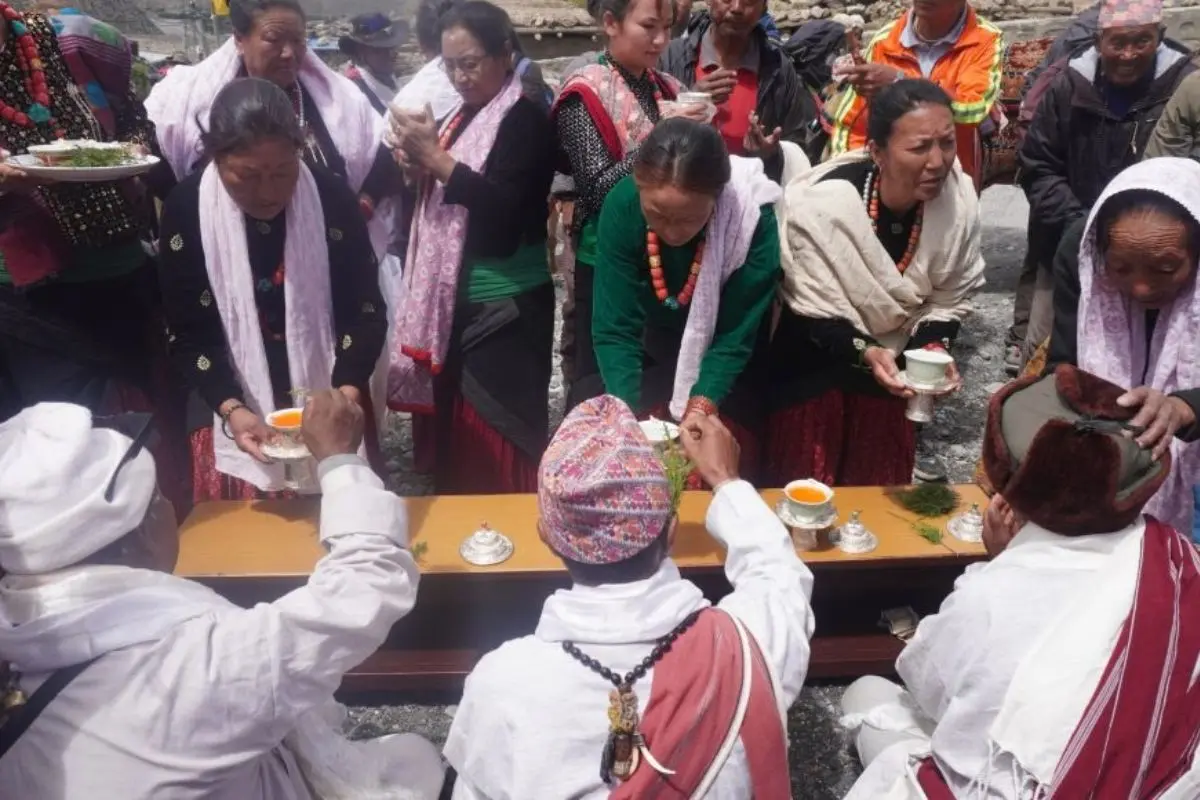
Religious life is a good example. Thakali practice blends Tibetan Buddhism, older local beliefs, and Hindu customs. The Thakali priest who carries out the role of a local shaman is known as the dhom. Families may visit a gompa, honor clan deities, and celebrate Hindu festivals like Dashain, all within the same year.
Thakali Festivals and Religious Traditions
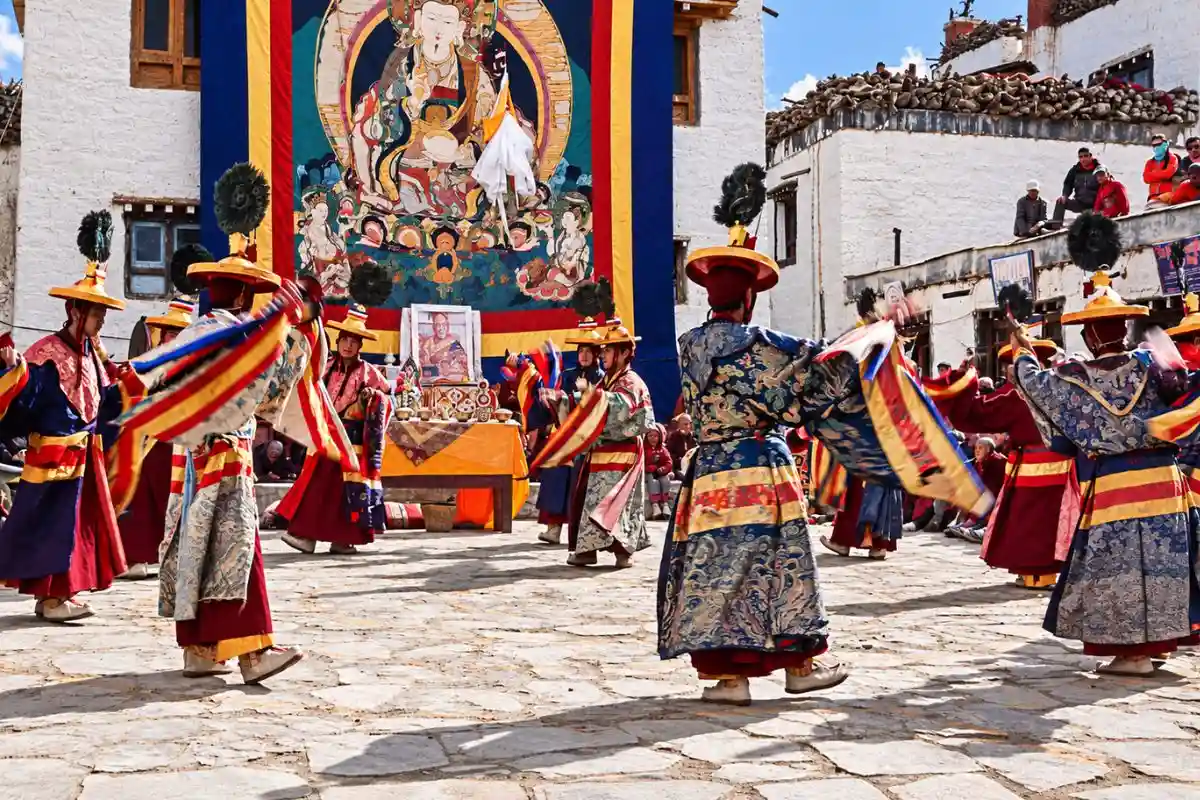
Lha Phewa, Toran Lha and Falo are regarded as the major Thakali festivals. How and where they are observed varies between Thakali groups.
| Festival | What it represents | How it is observed |
| Toran Lha | Thakali New Year and ancestor worship | It begins the day before Phagu Purnima and lasts three days, with ancestor worship, family feasts, and archery. |
| Lha Phewa | The appearance of the clan gods, held every 12 years | The festival runs for over two weeks as the gods of the four clans are brought out, carried through town and clan histories are recited. |
| Falo | Protection, harvest and nature worship | Held in the monsoon month of Bhadra; practices differ by village |
Toran Lha is the festival most Thakali families celebrate wherever they live. Food offerings are prepared for ancestors in the early morning, relatives are invited to share meals, and men compete in traditional archery. The Thakali community regards the bow and arrow as an essential part of its ethnic identity and a source of pride.
Lha Phewa belongs especially to the Tamhang Thakali of Thak Satsae. The four clans living there, Gauchan, Tulachan, Sherchan and Bhattachan, each have their own deity and temple. The most recent Lha Phewa took place in 2017, so the next is expected to be around 2029.
Falo shows how customs vary between communities. In Kobang it is known as Kumar Jatra and centers on young boys from the four Thakali clans. In Thini village, the festival is marked by lamas performing a nature worship ceremony and residents receiving their blessings.
Traditional Thakali Clothing and Dress
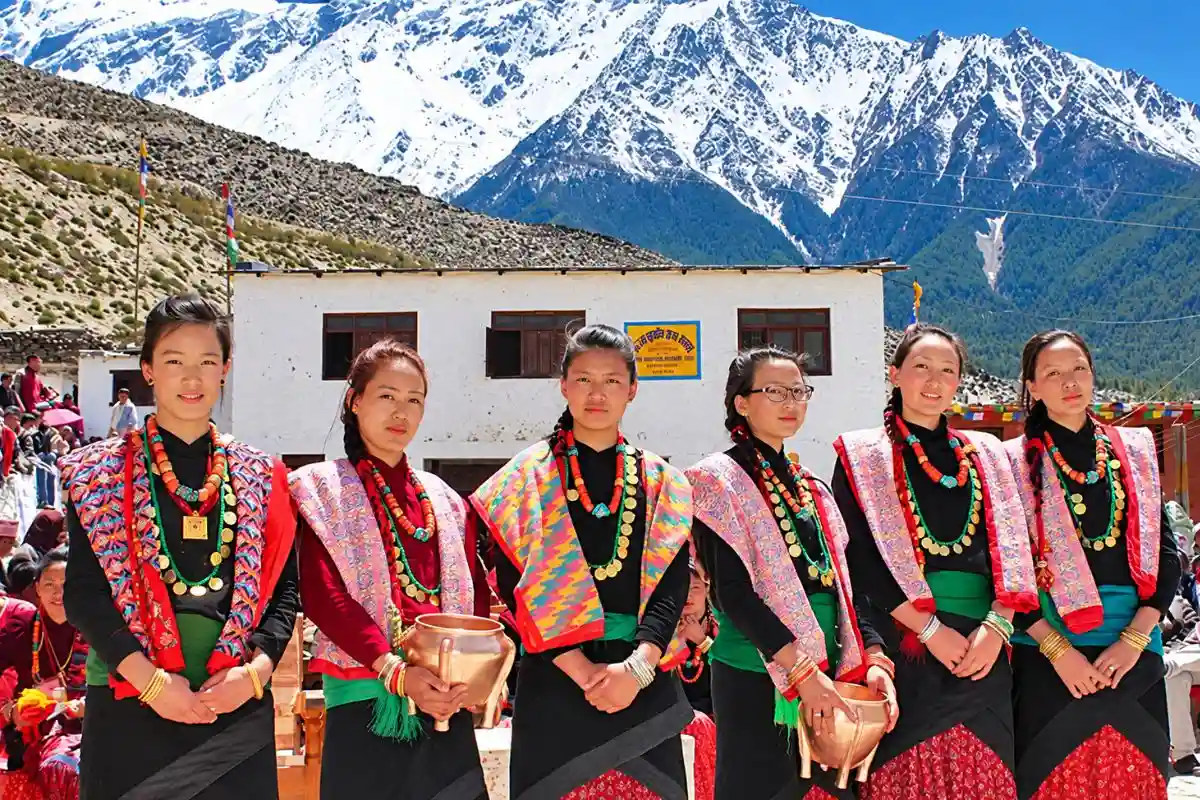
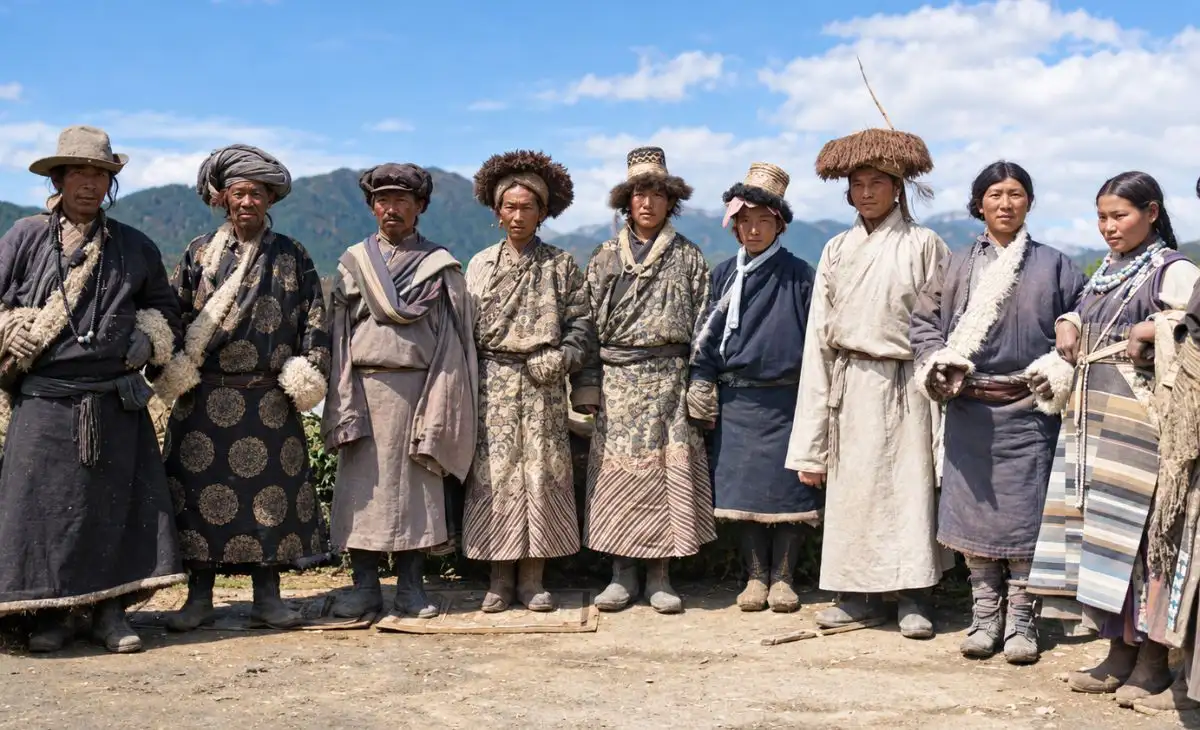
Traditional Thakali clothing reflects both the cold climate of Mustang and the community's links to Tibetan and Nepali hill cultures. Women's traditional attire typically includes a long wrap-around garment, a blouse, a sash at the waist, and distinctive jewelry, often with coral, turquoise, and gold. Men traditionally wore warm woollen garments suited to the high valley, though everyday dress today is largely modern.
Styles differ between Thakali groups and villages, so no single outfit represents every community. Traditional dress is most visible today at festivals like Toran Lha, at weddings, and at cultural programs, where it functions as a public statement of identity.
Thakali Music, Dance, and Social Traditions
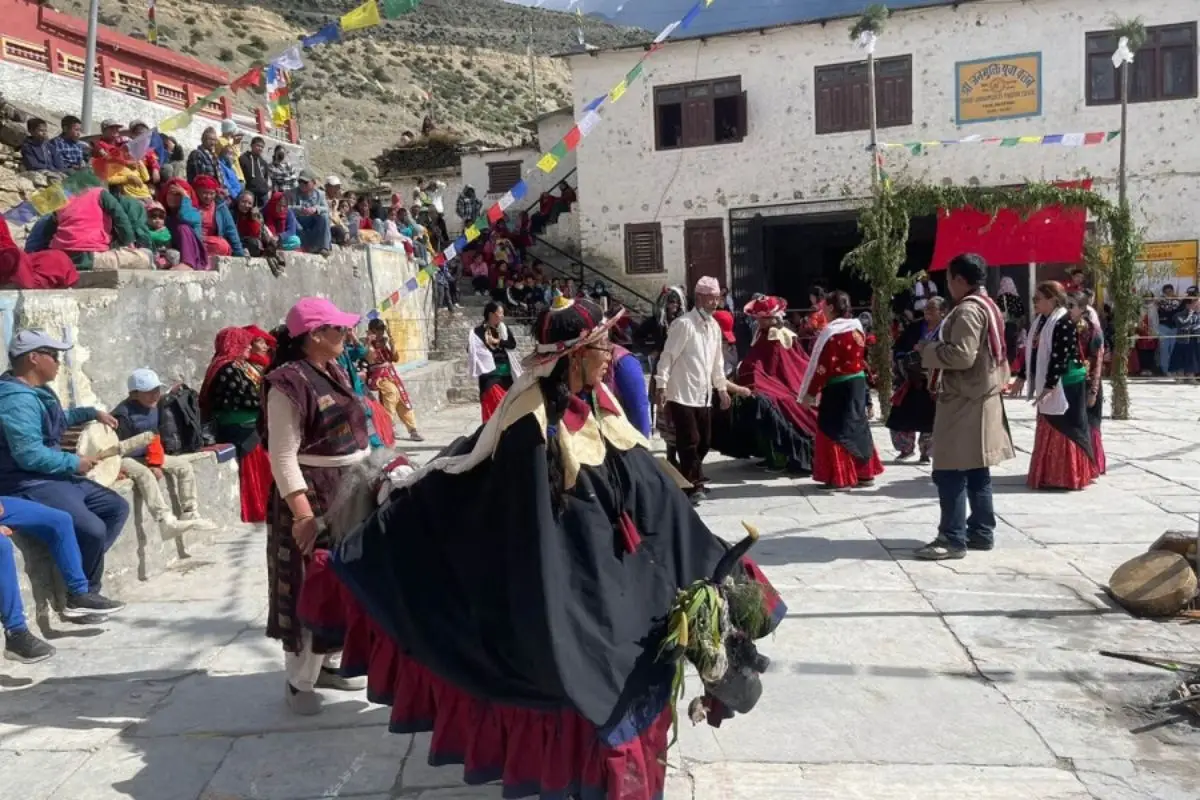
The main instruments associated with Thakali music are the madal, khaprang, and thamken. Music and dance are central to festival gatherings, where women often lead songs and group dances.
Social life has traditionally been organized around the clan, the village, and community institutions. Thakali social organizations, such as the Thakali Sewa Samiti in different towns, run festivals, maintain community halls, support members in need, and organize language and cultural activities. Much of Thakali tradition is passed down this way: children learn songs, rituals, and food preparation by taking part in them year after year, rather than from books.
What Is Thakali Food? Understanding the Cuisine
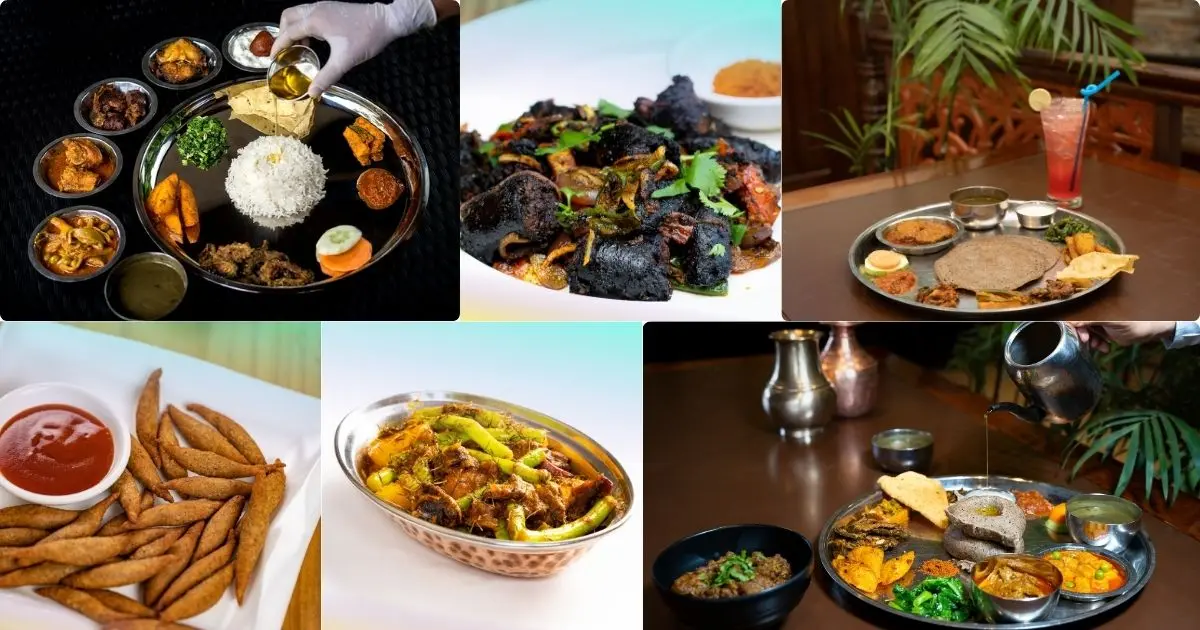
Quick answer: Thakali food is the traditional cuisine of the Thakali people of Mustang. It centers on a balanced meal of rice or grain, lentil soup, vegetables, pickles and often meat, seasoned with Himalayan ingredients such as jimbu, timur, and ghee. It developed from mountain farming, food preservation, and centuries of feeding travelers.
Food is one of the most visible expressions of Thakali heritage. The Thakali cuisine grew out of what the valley could provide: hardy grains, dried vegetables, preserved meat, and wild herbs. The hospitality of the trade era then refined those ingredients into a dependable, satisfying meal. Toran Lha preparations traditionally include foods such as roti and various meat dishes, including a preparation of sheep's blood inside lungs called dhung and a sheep leg soup called tasya.
What Is a Traditional Thakali Thali?
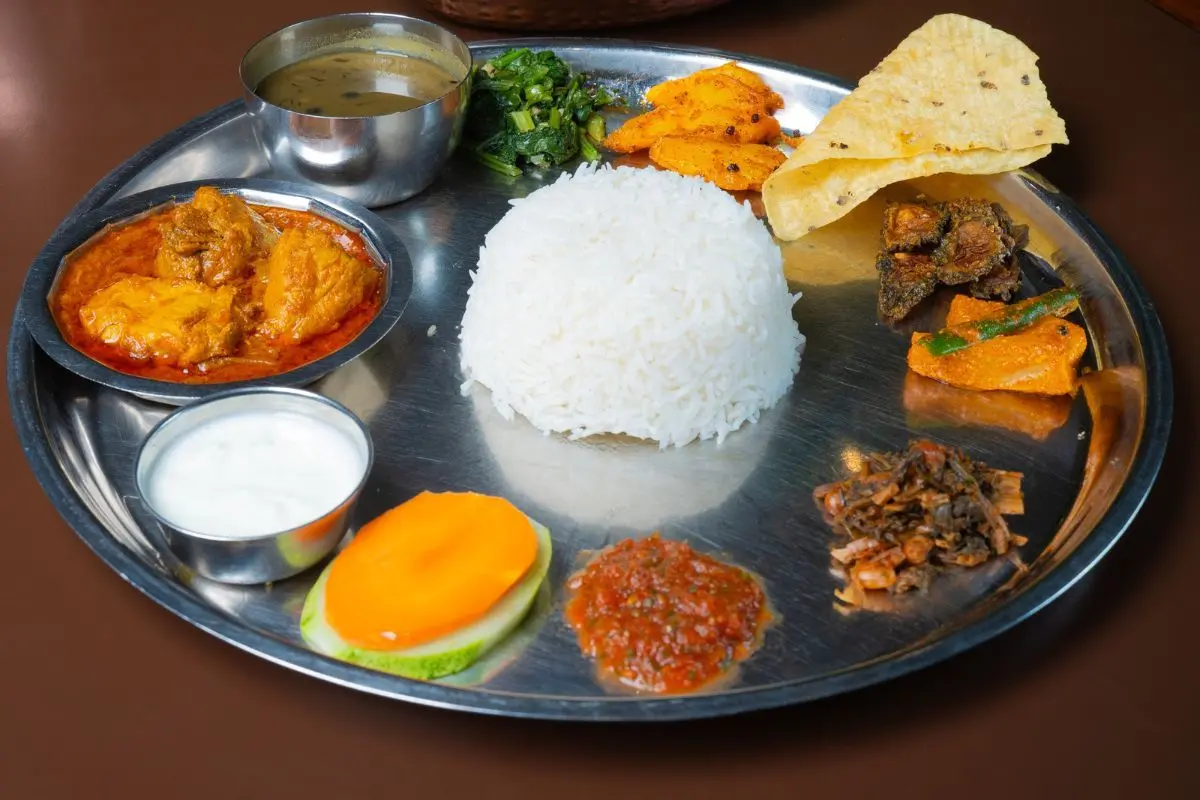
A Thakali Thali is a complete meal served on a single brass or metal plate, built around rice and dal and accompanied by several side dishes. A typical Thakali Thali includes:
- Rice (or buckwheat dhido or ghoken in more traditional versions)
- Dal, often black lentils tempered with jimbu and ghee
- Seasonal vegetables, such as potatoes, greens, or gundruk
- Pickles (achar), often made with tomato, radish, or timur
- Meat curry, commonly mutton or chicken
- Ghee served on the side or poured over rice
Modern restaurant versions vary considerably. What most restaurants serve today as a "Thakali Thali" is a modern refinement of home-style cooking rather than one fixed historical meal. The idea of generous refills, however, reflects the hospitality traditions of Thakali inns.
Popular Foods and Ingredients in Thakali Cuisine
| Ingredient or dish | Role in Thakali cuisine | Key characteristic |
| Jimbu | Tempering for dal | A dried Himalayan herb from the onion family with a mild garlic-onion flavour |
| Timur | Seasoning for pickles and meat | A Himalayan pepper that gives a tingling, citrusy numbness |
| Ghee | Cooking fat and finishing | Adds richness, especially to dal and rice |
| Buckwheat | Traditional staple | Grown in Mustang's cold climate; used in dhindo and flatbreads |
| Barley | Staple grain | Grown in high, dry terraces; used in tsampa and local brews |
| Black lentils | Core of Thakali dal | Slow cooked for a thick, deep flavour |
| Dried and preserved meat | Winter food source | Preservation was essential in the cold valley |
| Apples (Marpha) | Local produce | Marpha is known for apples and fruit brandy |
Each ingredient links back to the land. Jimbu grows wild at high altitude, buckwheat and barley tolerate cold and thin soil, and drying meat and vegetables made it possible to eat well through long winters.
What Makes Thakali Cuisine Different?
Thakali cuisine stands out for its use of Himalayan seasonings like jimbu and timur, its reliance on hardy mountain grains, its preservation techniques, and a meal structure refined through generations of feeding travellers.
Compared with much of Nepali cooking, Thakali food differs in a few specific ways:
- Mountain geography: Buckwheat, barley, and potatoes play a larger role than in lowland cooking.
- Seasoning: Jimbu is used less often in most other Nepali kitchens, and its use in dal is a hallmark of Thakali cooking.
- Preservation: Drying and storing food for winter shaped both dishes and flavors.
- Meal structure: The balanced, multi-dish thali format was polished in Thakali inns along the trade route.
- Trade influences: Contact with Tibetan and southern traders brought ingredients and techniques from both directions.
- Hospitality: Food was a business as well as a household tradition, which encouraged consistency and quality.
None of this makes Thakali food "better" than other Nepali cuisines. It is distinctive because it grew from a specific place and a specific way of life.
What Was Traditional Thakali Lifestyle Like?
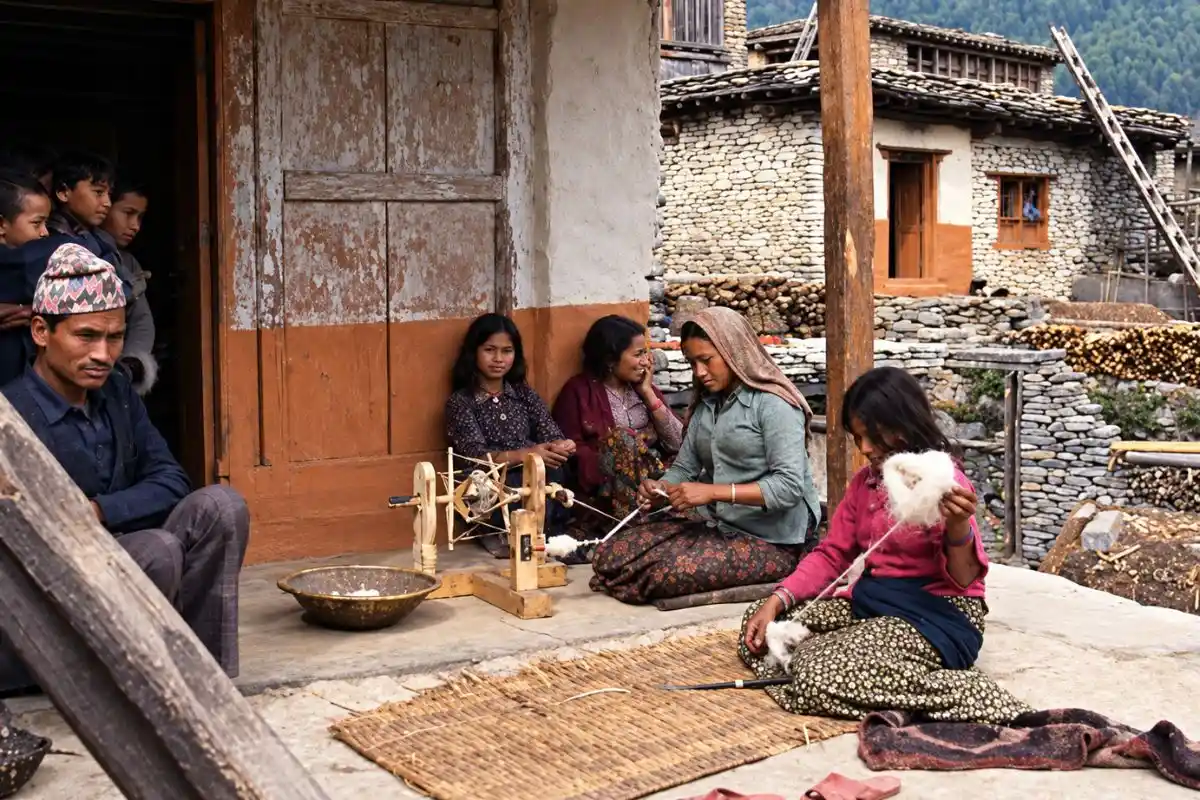
Traditional Thakali life in Thak Khola was organized around the seasons. In spring and summer, families irrigated and planted terraces of barley, buckwheat, and vegetables. Livestock, including yak, sheep, goats, cattle, and pack animals, supplied wool, dairy, meat, and transport.
Houses were built of stone with flat roofs, often around an inner courtyard. Firewood and dried crops were stacked on the roofs. In trading towns like Tukuche, homes doubled as inns and warehouses where caravans unloaded their goods.
Winters in the valley are harsh, and many families traditionally moved to lower, warmer areas during the cold months, where they traded or ran businesses before returning in spring. Community relationships held all of this together: clan ties, village councils, shared festivals, and cooperative credit through dhikur. Hospitality was not only a courtesy but also an economic foundation.
Thakali Migration and Life Outside Mustang
Although Mustang remains central to Thakali heritage, Thakali communities today live in many parts of Nepal.
Migration began long before the decline of the salt trade, as seasonal movement to lower valleys was already common. After the mid-twentieth century, many families settled permanently in Myagdi, Pokhara, Kathmandu, Bhairahawa, Butwal, Chitwan, and other towns. Many Thakali families live in market towns of Myagdi such as Dana, Tatopani, Beni, and Darwang.
Migration changed Thakali life in several ways:
- Business: Thakali families became known for hotels, restaurants, trading, and other enterprises in their new homes.
- Food: Thakali restaurants spread across Nepal, making the cuisine nationally famous.
- Education: Urban families gained access to schools and universities, and many younger Thakalis entered professional careers.
- Cultural transmission: Living away from the homeland made language and ritual harder to maintain, which encouraged communities to organize.
- Community networks: Thakali social organizations in towns keep families connected and host festivals like Toran Lha.
Thakali People in Modern Nepal
In the past, Thakali life was centered on villages in Thak Khola, farming, livestock and the trade route.
In the transition, the decline of trans-Himalayan commerce and the growth of roads and towns pushed many families south and into new kinds of business.
Today, Thakali people work across professions and live in cities and villages across Nepal and abroad. Many remain closely involved in hospitality and tourism, especially along the Annapurna Circuit, where Thakali-run lodges and restaurants welcome trekkers. Others work in education, government, business, and many other fields.
At the same time, community organizations and families continue to support heritage preservation through language classes, festival celebrations, publications, and cultural events. Younger Thakali people often move comfortably between a modern urban life and a strong sense of clan, village and festival identity.
| Aspect | Traditional Thakali culture | Contemporary Thakali life |
| Homeland | Thak Khola, Mustang | Across Nepal and abroad |
| Occupation | Agriculture, trade, hospitality | Diverse professions and business |
| Food | Local mountain ingredients | Traditional recipes with modern adaptations |
| Language | Thakali | Thakali, Nepali and other languages |
| Community | Village-centred | Village and urban networks |
Are All Thakali People the Same?
No. Thakali identity includes several communities with their own villages, dialects, and customs. Four groups consider themselves Thakali, and Nepal's census treats them as separate categories.
The groups commonly described are:
- Tamhang Thakali, from Thak Satsae (the area around Tukuche, Kobang and Larjung), with the four clans Gauchan, Tulachan, Sherchan, and Bhattachan
- Marphali Thakali, from Marpha
- Yhulkasummi Thakali, from villages of Panchgaun such as Thini, Syang and Chimang
- Chhairotan Thakali, from Chhairo
These groups share many traditions, but they also differ. Festivals like Lha Phewa belong mainly to the Tamhang, while other villages have their own rituals and clan deities. Dialects vary, and so do some marriage customs and religious practices. Recognizing these differences gives a far more accurate picture of the Thakali than treating them as one uniform community.
Why Is Thakali Culture Important to Nepal's Heritage?
Nepal is home to many ethnic communities, and the Nepal Tourism Board counts the Thakali among them. The Thakali contribution to Nepal's heritage is specific and easy to see:
- Food: Thakali cuisine has become one of the most widely recognized regional cuisines in Nepal.
- Trade: Thakali traders were key figures in the historic Kali Gandaki trade route between Tibet and the hills.
- Hospitality: The Thakali tradition of running inns helped shape tourism along the Annapurna Circuit.
- Language: Thakali adds to Nepal's rich family of Tibeto-Burman languages.
- Festivals: Toran Lha, Lha Phewa, and Falo preserve distinctive rituals of ancestor and nature worship.
- Mountain culture: Thakali life shows how communities adapted to one of the harshest valleys in the Himalaya.
Conclusion: Understanding the Thakali People Beyond Their Food
The Thakali people are an ethnic community of Nepal rooted in Thak Khola and the Kali Gandaki Valley of Mustang. Their history as traders on a Himalayan route shaped their hospitality, their business culture, and their cooperative community life. They speak the Thakali language, celebrate festivals like Toran Lha and Lha Phewa, and include several distinct groups with their own customs. Today, Thakali communities live throughout Nepal while keeping strong ties to their homeland.
Thakali cuisine is the best-known part of that story, but it makes the most sense when you see it as a product of the people, the place, and the history behind it.
Frequently Asked Questions About the Thakali People
Who Are the Thakali People?
The Thakali are an ethnic community of Nepal whose traditional homeland is Thak Khola in the Kali Gandaki Valley of Mustang. They speak the Thakali language as well as Nepali and are known for their history in Himalayan trade, their hospitality and their cuisine. Today, Thakali communities live throughout Nepal.
Where Do the Thakali People Come From?
The Thakali people come from Thak Khola, a section of the Kali Gandaki Valley in southern Mustang, Gandaki Province. Kobang in Thasang Rural Municipality is considered the community's place of origin, and villages such as Tukuche, Larjung, Marpha and those of Panchgaun are closely tied to Thakali history.
Are Thakali People From Mustang?
Historically, yes. Mustang, specifically Thak Khola, is the Thakali homeland. However, many Thakali families have lived for generations in Myagdi, Pokhara, Kathmandu and other parts of Nepal, so being Thakali today does not necessarily mean living in Mustang.
What Language Do Thakali People Speak?
Thakali people speak Thakali, a Tibeto-Burman language related to Gurung and Tamang, with dialect differences between communities. Nearly all Thakali people also speak Nepali, and many younger urban Thakalis use Nepali more often in daily life.
What Religion Do Thakali People Follow?
Thakali religious practice combines Tibetan Buddhism, local beliefs involving clan deities and nature worship, and Hindu traditions. Thakali communities also have their own priests, known as dhom, and the balance of these influences varies between families and groups.
What Food Are Thakali People Known for?
The Thakali are best known for Thakali cuisine, especially the Thakali Thali: rice, black lentil dal tempered with jimbu and ghee, vegetables, pickles and meat curry. Traditional cooking also relies on buckwheat, barley, and preserved meat suited to Mustang's climate.
What Is Thakali Culture Known for?
Thakali culture is known for its trading history, hospitality, cuisine, clan-based social organization, cooperative credit through dhikur, and festivals such as Toran Lha and Lha Phewa. It combines Himalayan, Tibetan and Nepali hill influences.
What Are the Traditional Occupations of the Thakali People?
Traditionally, the Thakali combined agriculture and livestock-keeping with long-distance trade along the Kali Gandaki route, especially in salt, grain and wool. Running inns for travelling caravans was also central, and this later developed into Thakali involvement in hotels, restaurants and tourism.
Where Do Thakali People Live Today?
Thakali people live in Mustang, in Myagdi towns such as Beni and Tatopani, and in cities including Pokhara, Kathmandu, Bhairahawa and Chitwan. Some Thakali families also live abroad and maintain community organizations there.
What Festivals Do Thakali People Celebrate?
The main Thakali festivals are Toran Lha, the Thakali New Year celebrated around Phagu Purnima with ancestor worship and archery; Lha Phewa, a festival held every 12 years in Kobang and Larjung; and Falo, a monsoon-season festival whose customs differ by village.
Are Thakali and Tibetan People the Same?
No. The Thakali are a distinct community with their own language, clans, and traditions. Centuries of trade with Tibet did bring Tibetan influences into Thakali religion, food and dress, but Thakali identity also draws strongly on Nepali hill culture.
Are All Thakali People From the Same Group?
No. Several communities identify as Thakali, including the Tamhang Thakali of Thak Satsae, the Marphali Thakali of Marpha, and groups from Panchgaun villages such as Thini and Chhairo. They share much in common but differ in dialect, clan deities and some customs.