Dhido Thali : A Complete Look at Nepal’s Traditional Meal
14th January, 2026
If you grew up in Nepal—or even spent time in the hills—you already know dhido thali isn’t just food. It’s the meal that shows up when rice feels too ordinary—a true Nepali thali from the hills. The one your grandparents trusted. The one that keeps you full long after the plate is cleared.
A dhido thali doesn’t try to impress you. It doesn’t need to. Made from millet, buckwheat, or corn, it’s heavy, grounding, and honest—the kind of meal that makes you slow down after the first bite and think, “This is real food.”
Today, people are returning to dhido not because it’s trendy, but because it makes sense. It’s traditional without feeling outdated. Filling without being flashy. And once you try a proper dhido thali, it changes how you think about Nepali food altogether.
This guide covers what dhido thali is, where it comes from, what belongs in a dhido thali set, the most popular variations (veg, chicken, mutton, fish), its health value, its cultural meaning, and where to eat authentic dhido thali in Nepal.
Introduction – Why Dhido Thali Still Matters in Nepal Today
Nepal’s food story isn’t only rice. Yes, a classic Nepali thali often means dal bhat with tarkari, achar, and maybe meat. But in many parts of Nepal—especially hills and higher elevations—rice was never the guaranteed everyday food. Grains like millet and buckwheat were.
Dhido thali still matters because it represents the relationship between food and land. It’s the kind of meal built for real life: cold mornings, hard work, long walks, and big appetites.
Tourists love dhido because it feels genuinely local, and locals love it because it feels like home. It’s a hill-style plate built for steady energy—simple grains, strong sides, and long-lasting fullness.
If you’re in Nepal and want one meal that feels actually local, dhido thali deserves a spot on your list.
What Is Dhido Thali?

Dhido (also written as dhindo) is a thick, firm porridge made by stirring flour into boiling water until it turns smooth and dense. The flour is usually:
- Millet (kodo)
- Buckwheat (phapar)
- Corn/maize (makai)
- (Sometimes) mixed flours, depending on the region.
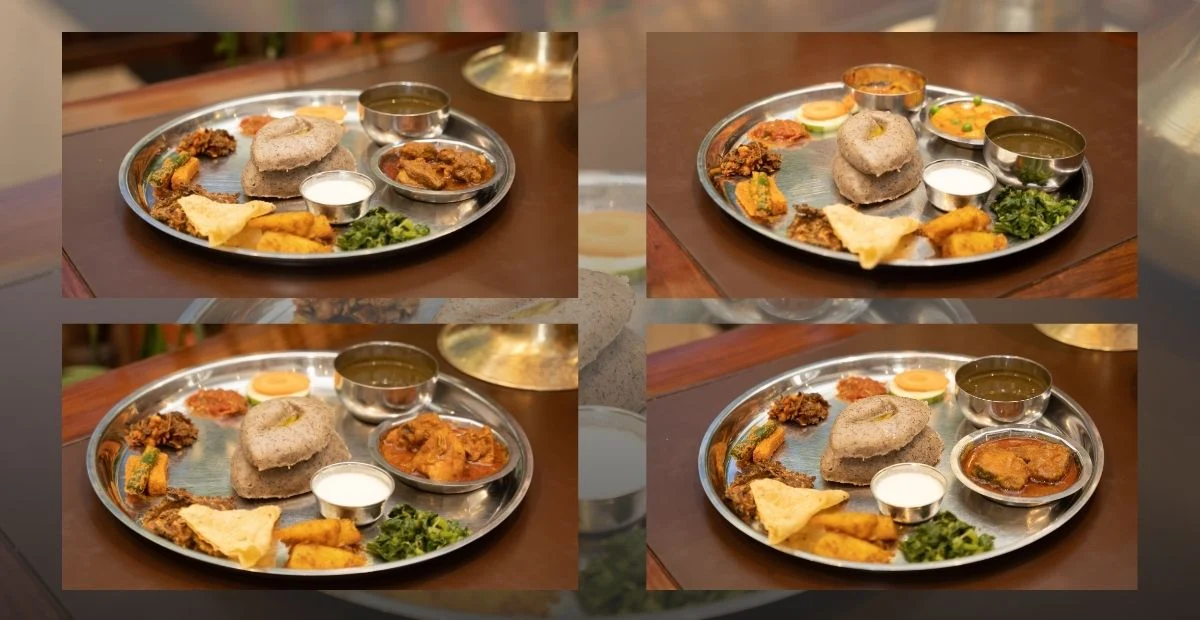
A dhido thali is the complete set meal built around that base—like a Nepali khana thali, but with dhido instead of rice. The plate usually includes:
- Soup/dal/broth (the dipping element—non-negotiable if it’s “proper”)
- Seasonal tarkari (vegetables)
- Achar (sharp pickle for punch)
- Fermented sides like gundruk (adds depth and appetite)
- Optional meat curry (if you’re ordering non-veg)
Dhido is mild by design, so it soaks up soup and achar without competing. If rice is the background of a Nepali meal, dhido is the base that holds everything together.
Origins of Dhido in Nepali Cuisine
Dhido comes from necessity, not branding.
In Nepal’s hills and mountains, rice wasn’t always practical. Climate, altitude, and access favored tougher grains—millet (kodo), buckwheat (phapar), and maize (makai)—so dhido became the everyday base meal.
It stuck because it worked: it kept farming families, porters, and rural households full for longer. That’s why people still call it Himalayan power food—simple, warm, and built for endurance, with the sides (dal/soup, saag, tarkari, gundruk, and achar) doing the flavor and nutrition work.
You’ll also see dhido in set-meal traditions, including Thakali khana, where the logic stays the same: a strong base plus balanced sides makes a complete Nepali plate.
Dhido Thali vs. Thakali Thali

People compare these two because both often arrive as a “set,” and both represent Nepal’s meal philosophy: balance, variety, and nourishment. But the experience is different.
Dhido thali
- Base: dhido (millet/buckwheat/corn)
- Feel: heavier, earthier, slower
- Vibe: rustic, practical, hill-and-mountain comfort
Thakali thali
- The base of a Thakali thali is usually rice, although dhido is sometimes offered as an alternative.
- Feel: lighter, more refined, more “restaurant-structured”
- Vibe: a polished set meal with multiple side dishes arranged neatly (a classic Thakali thali set)
When to pick which:
- Choose dhido thali when you want something grounding, filling, and traditional.
- Choose thakali thali when you want a refined, iconic set meal with a broader spread and a familiar rice base.
If you’re trying to understand Nepali food, you don’t choose one forever. You try both. They show different parts of the country.
Popular Types of Dhido Thali

Dhido doesn’t come in just one “correct” version. The base stays similar, but the thali changes depending on your preference—veg, light protein, or rich meat curries.
- Veg Dhido Thali: Greens, soup, achar, and fermented sides—clean and comforting.
- Chicken Dhido Thali: Familiar protein with a balanced Nepali curry.
- Mutton Dhido Thali: Richer, heavier, and more of a “special meal” feel.
- Fish Dhido Thali: A lighter protein option with bright sides.
If you’re trying dhido for the first time, start with veg or chicken. You’ll understand the plate faster.
Health and Nutritional Benefits of Dhido Thali
Dhido thali gets called Himalayan power food for a reason. It was built for people doing real work in hill life—walking, farming, carrying loads—so it focuses on steady energy, not quick heaviness. Since dhido is usually made from millet (kodo), buckwheat (phapar), or corn (makai), it tends to be higher in fiber and slower-digesting than a white-rice-heavy Nepali thali.
- Slow carbs → steadier energy: Millet/buckwheat/corn dhido digests slower than white rice, so you feel stable energy instead of a spike-crash.
- More fiber → better fullness: Those grains are naturally fiber-rich, so a dhido thali keeps you full longer and cuts random hunger.
- Balanced plate → dhido + soup + greens + achar/fermented sides: The soup helps you eat it, greens add nutrients, and achar/gundruk adds tang and digestion support without heavy oil.
Dhido isn’t diet food. It’s traditional, practical fuel. When served as a proper thali, it feels clean, steady, and satisfying.
Cultural Significance of Dhido Thali in Nepal
Dhido is hill food in the best way—built from what grows in tougher terrain and cooked in homes where meals had to be practical, warm, and filling. That’s why it still feels like “real Nepali food culture from the hills,” not a restaurant invention.
For many Nepalis living abroad, dhido is memory food—gundruk soup, warm thali in winter, and that “simple but complete” feeling. Within Nepal’s food traditions, dhido reminds you that the country isn’t one uniform Nepali thali - different regions grew different grains, and dhido is the proof.

Where to Eat Authentic Dhido Thali in Nepal?
Dhido quality depends on sides. Anyone can cook flour and water. The difference lies in the structure of the thali, which includes soup, achar, greens, fermentation, and balance.
What to look for in a Nepali thali restaurant serving dhido:
- Fresh seasonal tarkari (not bland, not overcooked)
- Proper soup or broth for dipping (not optional, not watery)
- Achar that tastes handmade (sharp, layered, not sugary-flat)
- Balanced portions (thoughtful plate, not just oversized)
Kathmandu
The best dhido usually comes from restaurants that already do set meals well, especially places known for consistent thakali khana standards.
If you want a reliable set-meal kitchen with proven volume and consistency, go where set meals are the identity. Jimbu Thakali by Capital Grill is built on that exact set-meal culture, with Thak-Khola/Mustang roots in different restaurant locations, such as Tangal, New Baneshwor, Jhamsikhel, and Kalimati, and over 2 million thalis served and counting.
Pokhara
Pokhara is strong for dhido because trekkers want meals that feel local and filling. Search for places that serve mountain-style sets, not watered-down tourist plates.
If you’re searching “thakali khana set near me” or “Nepali thali restaurant,” don’t trust ratings alone. Look at photos. Authentic plates show variation: greens, pickles, soups, and seasonal changes. If every plate looks identical, it’s usually factory-style cooking.
What Tourists Should Know Before Trying Dhido Thali?
First time eating dhido? You’re not alone. Dhido texture surprises first-timers. It’s not rice. It’s not bread. It’s dense and firm.
How it’s traditionally eaten:
- take a small portion of dhido
- shape it (usually by hand)
- dip in soup/curry/achar
- swallow (often without chewing)
Practical tourist tips:
- Start with veg or chicken dhido thali if you’re unsure.
- Ask what flour is used (millet vs buckwheat tastes different).
- Don’t rush; dhido is meant to slow the meal down.
- You can use a spoon if you prefer; following tradition is optional, but enjoying the meal is essential.
A delightful way to think about it: dhido is the “bread” of the plate—neutral enough to carry flavor, strong enough to satisfy.
Conclusion – Why Dhido Thali Is a Must-Try Nepali Meal
Dhido thali is filling, traditional, and balanced. It’s not flashy, but it’s memorable. It tastes like Nepal’s hills: grainy, warm, practical, and honest.
Try it once for curiosity. Try it twice because it makes sense.
If you want a set-meal restaurant experience with proven consistency, go where set meals are the core. For Kathmandu diners and travelers, Jimbu Thakali by Capital Grill is a direct option, especially if you’re also exploring Thakali set culture and want dhido done with proper sides and structure. You can also try other Thakali dishes like Dhung, Kanchyamba, Faro soup, Ghoken Thali, Thakali Mutton Kebab, Mustang Aloo, Aloo Jimbu Sukuti, Thakali Ghetto, etc. at Jimbu Thakali for a whole Thakali experience.
FAQs About Dhido Thali
What Is Dhido Thali in Nepali Cuisine?
Dhido Thali in Nepali cuisine is a traditional set meal where dhido replaces rice as the base, served with soup/dal, vegetables, pickles, fermented sides, and optional meat.
What Are the Main Ingredients Used to Make Dhido?
Dhido is commonly made from buckwheat flour, millet flour, or corn flour, cooked by gradually stirring flour into boiling water until firm. Buckwheat is also used to make Ghoken, a traditional flat preparation cooked in ghee — a different take on the same grain."
What Is Dhido Called In English?
It’s often described as a thick porridge or stiff porridge made from grain flour, though the traditional name “dhido/dhindo” is commonly used.
Is Dhido Thali Healthy Compared to Rice-Based Nepali Meals?
Often, yes—especially when made with buckwheat or millet and served with vegetables and fermented sides. Buckwheat and millet are associated with fiber and steadier blood sugar responses in nutrition sources.
Is Dhido Vegan or Vegetarian-Friendly?
Yes. Dhido itself is vegan. Veg dhido thali can be fully vegan depending on whether ghee or animal-based broths are used.
How Is Dhido Traditionally Eaten in Nepal?
Traditionally, people form a small ball of dhido, dip it into soup or curry, and swallow—often without chewing.
What Is the Difference Between Dhido Thali and Thakali Thali?
The main difference is the base: dhido thali uses dhido, while thakali thali is usually rice-based and served as a more standardized set meal with multiple sides.
Is Dhido Considered Nepal’s National Dish or a Traditional Staple?
Dhido is a traditional staple, especially in hill and mountain regions. Dal bhat is more commonly described as Nepal’s national staple dish.